Health and well-being of Canadian women and girls impacted by remote living
-
Share on Facebook
-
Share on Bluesky
-
Share on X
- Copy Link
A new study has found significant differences in the health and wellbeing of women and girls living in rural and remote areas versus those in more accessible areas.
The study by Statistics Canada was based on the Canadian Community Health Survey (CCHS) from 2015 to 2018, the Canadian Vital Statistics – Death Database from 2015 to 2018, and the updated Remoteness Index Classification.
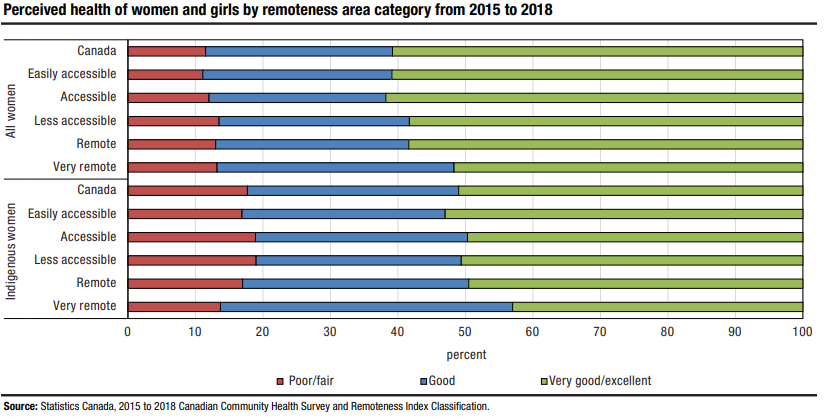
The study found that three in five (60.9 per cent) of women and girls aged 12 and over reported very good or excellent health in easily accessible in areas. Comparatively, over half (51.7 per cent) of respondents in remote areas reported similar health conditions.
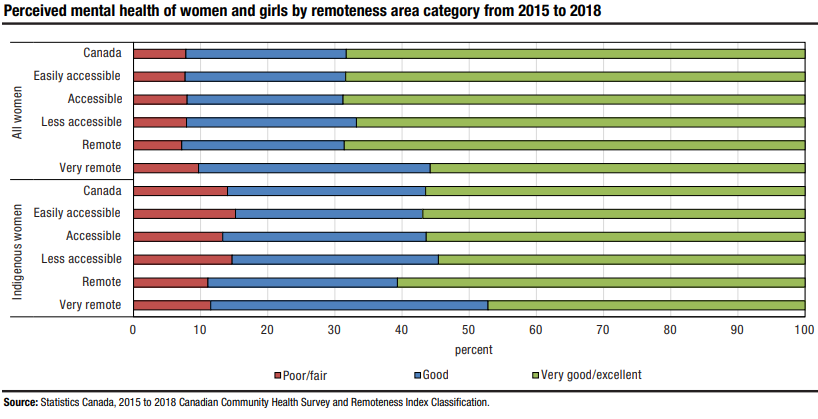
Indigenous women and girls were less like to report very good or excellent general health in very remote areas (43 per cent) than those living in easily accessible areas (53 per cent). StatsCan noted that for many Indigenous peoples and communities, there are a number of other factors that contribute to gaps in health outcomes including availability of traditionally, culturally and spiritually appropriate health services as well as polices and services to promote general and mental health.