
Get the Top, Local stories delivered to your inbox! Click here to join the daily Vernon Matters newsletter.
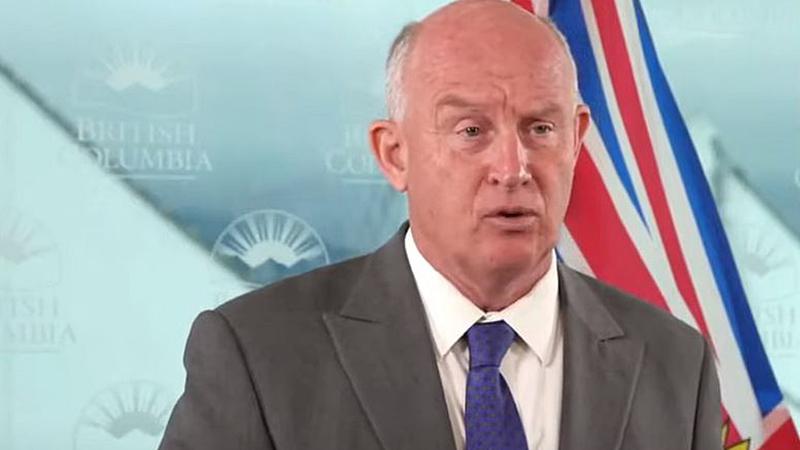
Mike Farnworth, Solicitor General, Public Safety Minister. (Photo credit: Province of B.C.)
Until May 25

Site specific road checks will be held to enforce travel restrictions

Apr 30, 2021 | 10:25 AM

The B.C. government has given the go ahead to site-specific road checks on travel corridors between regions to help enforce the non-essential travel restrictions announced last week.

The road checks may be put in place at any time until the order is lifted at 12:01 a.m. on May 25, 2021, (after the May long weekend), and may be set up on highway corridors that connect different regions of the province to remind travellers of the order.

Solicitor General Mike Farnworth said the restrictions on non-essential travel are saving lives, and have led to a significant drop in out-of-region travel.

During the first weekend of the new restrictions, BC Ferries vehicle traffic was down more than 25 per cent fleet-wide, and passenger traffic down more than 30 per cent, compared to the weekend before. Resort communities and accommodation businesses have contacted the province to note significant declines in out-of-region visitors and bookings, and BC Parks has reported more than 5,000 cancellations in the past few weeks.

Farnworth added it is important the province get enforcement right, and consider concerns raised by the public and incorporate the feedback received from racialized communities.

“I want to be clear that the intent of this order is not punishment, but rather education around non-essential travel prevention to protect us all from the spread of COVID-19. My hope is that every British Columbian realizes the tremendous progress we can make if we stay close to home, and we can give the heroes in our health-care system a fighting chance at putting the current spike in cases behind us,” Farnworth said.

The minister said one obvious place for the road checks will be on Highway 1 where it goes to the Interior and Coquihalla Highway.

“Motorists will be warned well ahead of the road checks with signs reminding people of essential travel only. You will see signs several kilometres before you actually get to the road check. You will be able to turn around if you think your travel is not essential,” Farnworth explained.

When stopped at a road check restricting non-essential travel, police will only have the authority to request:

  • a driver’s name, address and driver’s license
  • any available documentation regarding driver’s name and address (for example, secondary identification that confirms a driver’s residential address if recently moved)
  • the purpose of the driver’s travel (documentation regarding travel is not required)

Police cannot engage in arbitrary vehicle or street checks. Site-specific enforcement measures will be informed by ongoing discussions with stakeholders on limiting the impacts to the public and racialized communities. If police have reasonable grounds to believe that a person has travelled for a non-essential purpose, they can direct the traveller to turn around and leave the region. These measures will be limited to site-specific and authorized police operations on travel corridors between regions.

“The goal of these road checks is education and further discouraging people from travelling for non-essential reasons. If compliance measures are deemed necessary by police, fines can be handed out. At the discretion of police, a contravention of this Emergency Program Act travel order may be subject to a $575 fine,” Farnworth said.

RCMP issued a statement Friday afternoon, stating the checks will be conducted by a dedicated team and will not reduce police service in the communities which they serve.

“As outlined in the provincial announcement, the BC RCMP will not be conducting random checks of vehicles or persons. Enforcement will only occur at the designated road check locations on Highways #1, #3, #5, and #99 near to the boundaries between the combined Coastal and Fraser Health Regions and the combined Northern and Interior Health Regions.  When a road check is active, a notification will also been made on the BC RCMP website and social media channels,” Chief Superintendent Dave Attfield, said.

For more information about Covid-19 travel restrictions, visit: www.gov.bc.ca/covidtravel

The regional zones are:

1. Lower Mainland and Fraser Valley (Fraser Health and Coastal Health regions);

2. Vancouver Island (Island Health region); and

3. Northern/Interior (Interior Health and Northern Health regions).

View Comments