
Get the Top, Local stories delivered to your inbox! Click here to join the daily Vernon Matters newsletter.
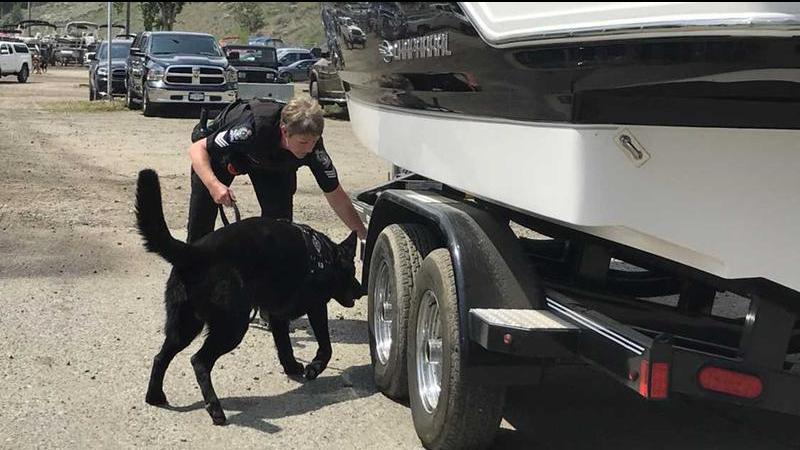
Mussel-sniffing dog used by B.C. Conservation Officer Service (submitted photo)
Province being asked to do more

One-third of boats surveyed not checked for mussels

Mar 3, 2021 | 5:15 AM

The contractor responsible for helping get the message out to Okanagan boaters about not bringing invasive quagga and zebra mussels into B.C. waters has shared some alarming numbers with the Okanagan Basin Water Board (OBWB).

The Okanagan and Similkameen Invasive Species Society (OASISS) has helped conduct the Clean, Drain, Dry-Don’t Move a Mussel education campaign in the Okanagan for the past several years.
OBWB education campign ( photo /OBWB)

OASISS deployed three summer staff at 11 Okanagan boat launches and surveyed 361 vessels, asking the same questions used at boat inspection stations.

The OASISS survey showed the  number of boats stopping for inspection has declined for the past three years, with 2020 being an all-time low. The society reports 93 per cent of boats were from Alberta, but there were some from Saskatchewan, Manitoba and the U.S. (prior to the border closure).

Sixty-seven per cent reported that they stopped for inspection, and the 33 percent that were not inspected, were asked why their boat hadn’t been inspected.

“We get everything from, ‘We didn’t see it, it was closed, the line-up was too long and I didn’t want to stop,'” Lisa Scott, OASISS Executive Director, said. “Trailered boats are slipping through. Only one infested boat and we would be changed forever.”

It is illegal to bypass an open inspection station, but there are not always sufficient personnel, to chase down and fine, or warn, offenders.

Scott told the OBWB board Tuesday (Mar. 2) about standing on the shoreline in Gimli, Manitoba surveying the devastation as a result of the invasive mussel infestation of Lake Winnipeg.

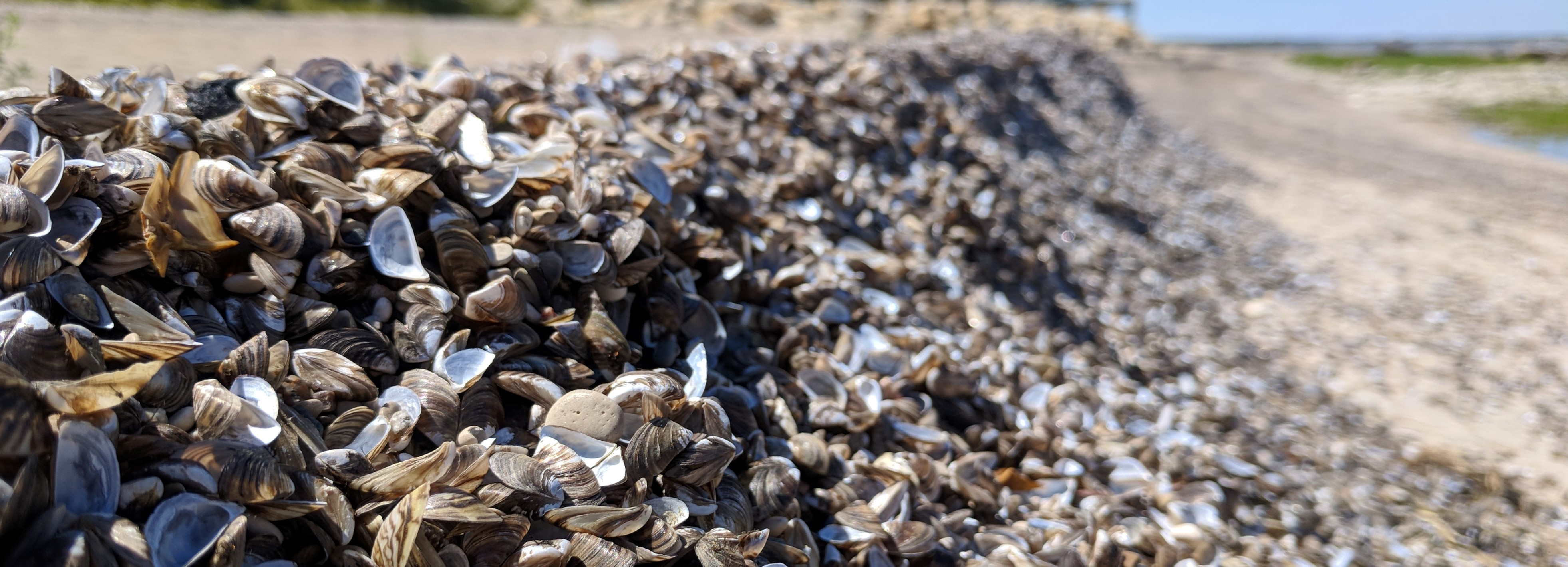
“The dead shells were so thick on the beach you couldn’t walk on it with bare feet without getting cuts, and because the live mussels attach to anything including rocks, you can’t walk in the water with bare feet,” Scott said.

Mussel shells washed up on the shore of Lake Winnipeg. (photo / Lower Souris Watershed Council)

OBWB is writing to the province asking for action on six points:

  • Restore inspection funding levels to 2017 levels of $3.8 million adjusted for inflation.
  • Update an early detection and rapid response plan
  • Introduce pull the plug and enforcement legislation
  • Require proof of inspection prior to launching in B.C. waters.
  • Providing information on protection of infrastructure
  • Provide additional funding to invasive species organizations.

“We have suggested to the province over the past several years, ways to accommodate centralized inspections stations, like they have in the state of Idaho, including funding models and things like that,” James Littley, OBWB Operations and Grants Manager, told Tuesday’s board meeting.

Idaho was one of the first Western U.S. states to implement comprehensive border check-points inspecting 700,000 vessels since 2009, and finding 290 mussel-fouled boats.

On a positive note, more boaters are aware of the invasive mussel issue than five years ago.

“In 2015, under 50 per cent of people had heard about the problem, in 2020 the number hit 96 per cent,” Scott said.

View Comments