
Get the Top, Local stories delivered to your inbox! Click here to join the daily Vernon Matters newsletter.
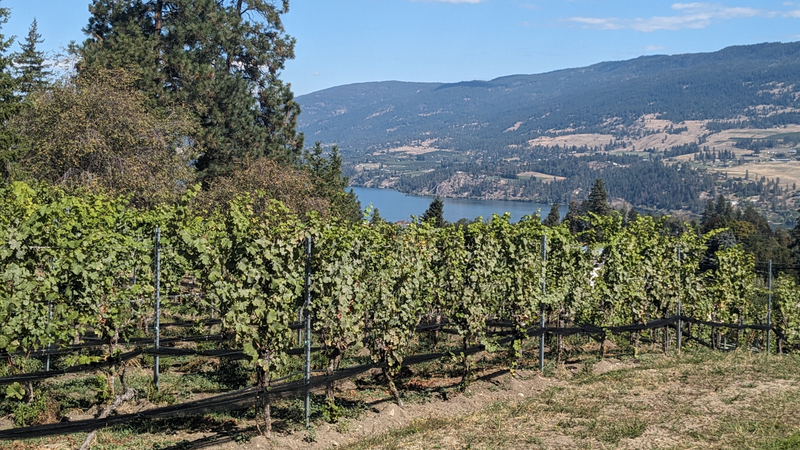
Grapes growing at the Blind Tiger vineyard in Lake Country in the summer of 2023 (photo by Liam Verster / Vernon Matters)
'liquid gold'

Icewine production to be limited this year, wineries preparing for more dry conditions

Jan 3, 2024 | 3:00 PM

The number of wineries growing grapes for Icewines has dropped on an annual basis.

Speaking with Vernon Matters, Lindsay Kelm, acting communications director with Wine Growers British Columbia, said the wine industry, particularly the Icewine operations, have seen some climate-related challenges for over a year.

“Starting with the freeze in December of 2022, and then this December, we had the complete opposite where we’ve had unseasonably warm temperatures,” Kelm said.

“Obviously for Icewine that is a particular bit of an issue, however, we actually had less fruit going around all together. So only four wineries in British Columbia registered to produce Icewine this year, and it looks like they might actually be able to pick next week for that [when temperatures drop below the required minus eight degrees].”

Kelm added the cold snap in December of 2022 when temperatures dropped to near minus 30 was “catastrophic” as it resulted in a 54 per cent crop reduction across the Okanagan, as well as vine death and long term damages.

“It’s definitely an unprecedented event and one we hope to never see again because it will take four to five years for the industry really to recover from this,” Kelm said.

The representative for Wine Growers BC could not say which wineries were registered as Icewine producers this year during the conversation with Vernon Matters, though did note that figure was lower than previous years.

“Icewine has always been one of those smaller production wines that we’ve done in the valley,” Kelm said.

“For example, last year there were only eight registered wineries, seven of them picked. In 2021 only six wineries registered, five picked. So it’s been a declining wine for our region. The maximum we’ve ever had was up to 30 and that was in 2013. So there’s never been a huge amount of Icewine produced, which is why it’s termed as liquid gold, but this year in particular.”

The yield from this winter’s Icewine crops are estimated to be 18 metric tonnes, which would also be down from the 149 tonnes, 34 tonnes, and 74 tonnes picked over the past three years, respectively. Kelm could not estimate how many bottles of Icewine the 18 tonnes of grapes would produce.

Looking back on the past year, Kelm said the hot and dry conditions seen in the Okanagan Valley were not detrimental to the local vines.

“Vines actually do well when they’re under a little bit of stress, and water is one of the ways to stress the vines to produce quality fruit,” Kelm told Vernon Matters.

“Most of the wineries are using drip-irrigation, which requires targeted, minimal water as well. So with the drought conditions, that shouldn’t play a huge factor at this point of time.”

There was some impact from wildfire smoke in 2023, though Kelm said it was concentrated in the areas of heavy smoke and was not a widespread concern.

She added wineries are prepared for another dry year in 2024.

“There’s been a lot of work, particularly in terms of sustainability and what systems [wineries] are using, how they’re farming as well, and how they prune the vines, how they have cover crops in the vineyards and things like that can help retain that moisture naturally in the vines and create different nutrients that the vines really do need as well,” Kelm said.

“So there’s been a lot of work going on into sustainability and the biodynamic style and regenerative style of farming that can help sustain the vines more naturally and really mitigate any damage from climate change that we’re seeing year-to-year.”

Kelm also said this year’s focus for many wineries will be planting new vines, which won’t be producing grapes for a few years time.

She added the industry is adapting to the climate change challenges and looking to be sustainable and maintain its operations in the Okanagan Valley in the long-term future.

View Comments