Get the Top, Local stories delivered to your inbox! Click here to join the daily Vernon Matters newsletter.
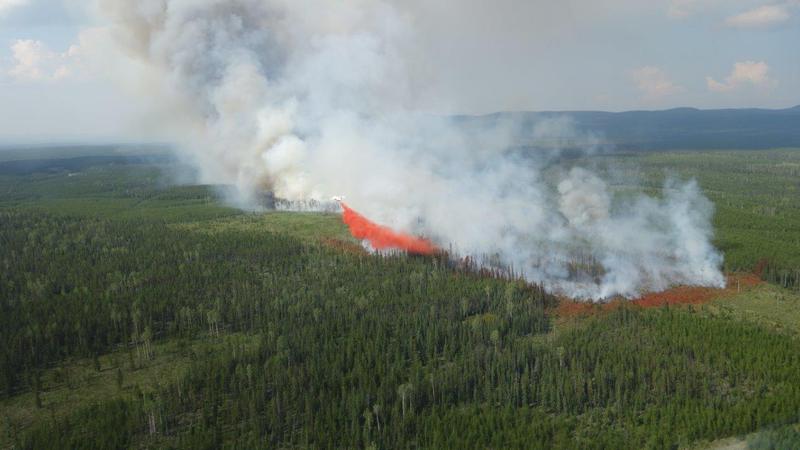
(File photo/BC Wildfire Service)
Fire and drought update

Fire risk and drought levels still very high in B.C.

Jul 27, 2023 | 12:35 PM

While much of B.C. felt a bit of reprieve with the recent rain and cooler temperatures, the weather has had little impact on the fire risk and drought conditions in B.C.

“While the rain did give our hardworking firefighters a chance to take a deep breath, the wildfire and drought situation remains largely unchanged due to the drought conditions we have been seeing since last summer,” Bowinn Ma, Minister of Emergency Management and Climate Readiness, told a news conference Thursday, July 27.

“This is why I am calling on every British Columbian to remain vigilant and to follow all regional fire prohibitions and water restrictions.”

Bruce Ralston, Minister of Forests, echoed Ma’s point that the drought conditions and wildfire risk remain high.

“This weather should not deter you from taking the necessary steps to get prepared for this wildfire season,” Ralston said.

“We can all do our part to help firefighting efforts. I encourage everyone to FireSmart their home and property. This can be as simple as cleaning your gutters, mowing your lawn, or making sure that anything combustible is stored at least 10 metres away from your house.”

Further FireSmart activities can be found online.

Ralston added everyone needs to follow all fire prohibitions that have been set in place.

As of Thursday, there were 406 active wildfires in B.C., 21 of which were Fires of Note.

“Since the beginning of April this year, 496 wildfires have burned a total of 1.5-million hectares,” Ralston stated.

“For much of the fire season so far, the north has been the centre of fire activity in British Columbia. However, as conditions change, we’re seeing more wildfire in the Cariboo, Central Interior and the East and West Kootenays.”

Cliff Chapman, director of provincial operations for the B.C. Wildfire Service (BCWS), noted the total area burned already this year was 1,512,635 hectares as of Thursday.

“We’re at just over 1.5-million hectares and that is a record for B.C. since 1950 (when data collection began),” Chapman said, adding 2017 and 2018 were also challenging years with over 1.2-million and 1.3-million hectares burned, respectively.

“And I think it’s worth noting we are still not into August, and August is still typically a very significant wildfire month for British Columbia.”

Chapman added 277 wildfires sparked within the last seven days, but 52 per cent of those were out as of Thursday, and 15 per cent were either Under Control or Being Held.

He also noted the recent weather patterns are shifting the wildfire risk from the north to the Cariboo, Kamloops, and Southeast Fire Centres.

“We are shifting resources from the northern fires to the southern fires, but rest assured we are leaving resources in place on our northern fires to ensure they do not pick up again and challenge our suppression efforts that we have worked so hard on for the last two months,” Chapman stated.

The provincial firefighting director also stated the “hazard is not gone, the fire season is far from over right now,” repeating that August usually brings a lot of fire activity and that BCWS will be ready to respond quickly to new activity.

Ralston said there are over 3,000 personnel actively engaged in wildfire response throughout B.C. as of Thursday, nearly 600 of whom are out-of-province firefighters from the United States, Mexico, Australia and Brazil. Additional support is also expected to arrive from Ontario and Costa Rica within the week.

“Additionally, the Canadian Armed Forces are now on the ground in Vanderhoof and Burns Lake and are assisting with putting out fires that are under control,” Ralston said, adding there were also 1,400 locally contracted personnel either directly or indirectly assisting with wildfire response throughout B.C.

Ma added there were approximately 1,060 British Columbians under Evacuation Order and 5,430 people under Evacuation Alert due to the active fires, and advises everyone be prepared and ready to leave their properties if any existing or new fires threaten their homes.

“I would like to remind everyone that if your community is placed under an evacuation order you must evacuate the area immediately,” Ma said.

“Your local authority or First Nation will provide information on evacuation routes and evacuation reception centres. People must register and attend an evacuation reception centre in order to access Emergency Support Services (ESS) which includes everything from providing accommodation, food and transportation to taking care of other essential needs that you may have.”

British Columbians can pre-register with ESS online through the Evacuee Registration and Assistance tool.

She added while it may be difficult to follow an evacuation order and leave everything behind, the orders must be followed.

“These types of orders, the evacuation orders, are not given out lightly,” Ma stated.

“They are issued in order to save lives, and it’s not only the lives of those who stay behind that are put at risk when they refuse to evacuate, it also puts at risk the lives of the responders who are trying to fight the fires, who are repeatedly going into homes to ask people and plead with people to leave. It’s putting everybody at risk”

In addition to the wildfires, Ma stated many communities are feeling the effects of the drought.

“The recent rainfall is much welcome, but it wasn’t enough to have a meaningful impact on our drought conditions. As of [Thursday], 23 of our province’s 34 water basins are in Drought Level 4 or Drought Level 5 classification,” Ma said.

“We are calling on everyone in B.C., including residential and industrial water users, to reduce their water usage. Every drop counts.”

The Okanagan Water Basin as of Thursday was ranked at Drought Level 3 on a scale of five, while to the north, the Salmon River Basin was Level 5 and the South Thompson Basin was Level 4. The Similkameen Basin to the south of the Okanagan was also Level 4.

Ma stated there have been indications that voluntary water reductions have assisted with addressing water scarcity in B.C., and while no temporary protection orders have been issued from the provincial level, they will be issued if required.

The province reminds the public that wildfires can be reported to the B.C. Wildfire Service by calling 1-800-663-5555 or by dialing *5555 on a cell phone.

View Comments