Get the Top, Local stories delivered to your inbox! Click here to join the daily Vernon Matters newsletter.
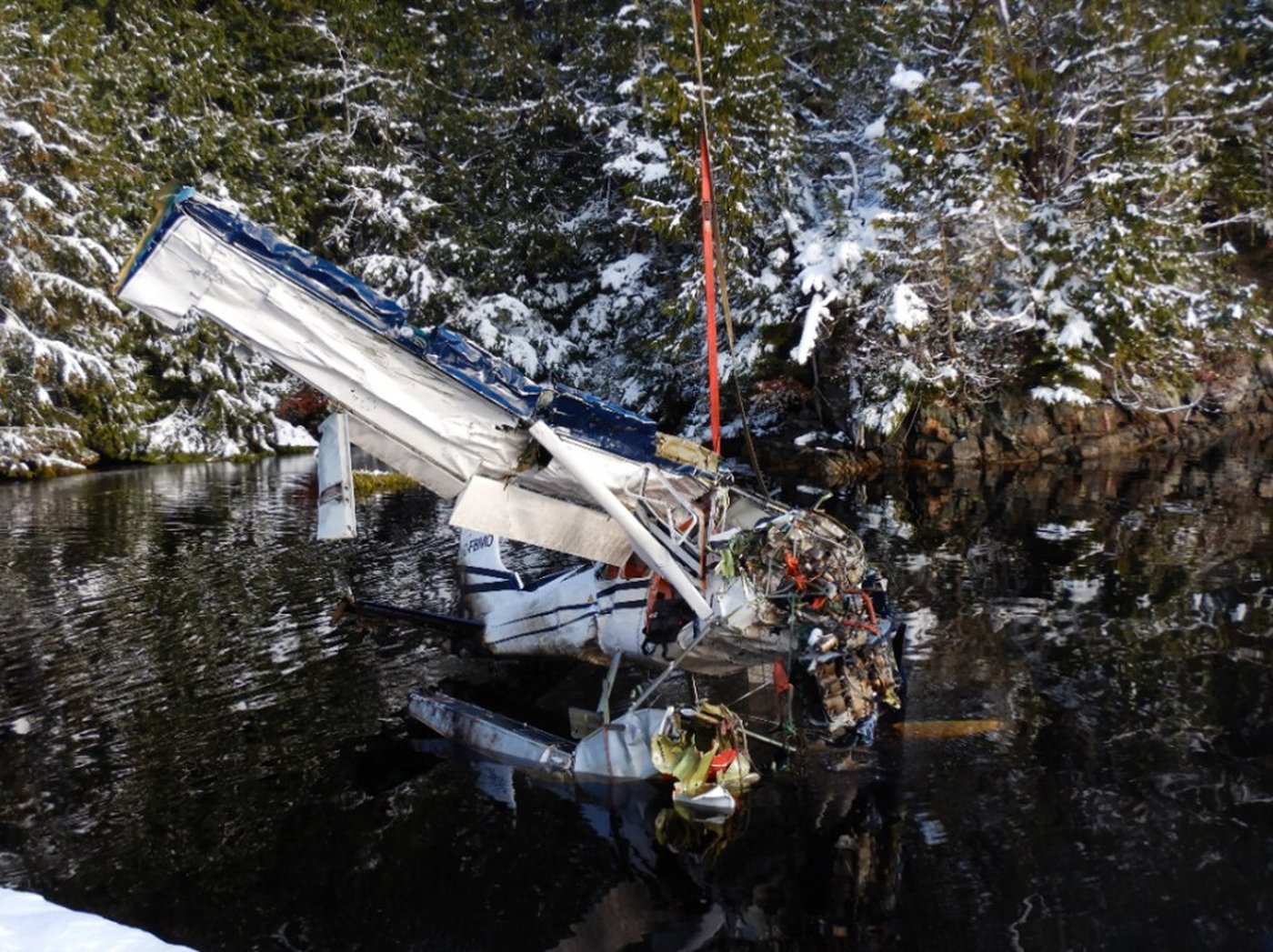
The wreckage of a seaplane that crashed on Nov. 23, 2022, as it was leaving a logging camp in Strachan Bay along B.C.'s central coast, is shown in this undated handout photo from the Transportation Safety Board of Canada. THE CANADIAN PRESS/Handout — TSB (Mandatory Credit)

TSB: ‘Incomplete’ risk assessment led to 2022 B.C. plane crash that killed three

Oct 15, 2026 | 11:11 AM

RICHMOND — Investigators say “limited knowledge” of local wind conditions and a possibly incomplete risk assessment likely led to a pilot losing control of his plane in a crash in British Columbia that killed all three people.

The Transportation Safety Board says in its final report that the crash happened on Nov. 23, 2022, when the seaplane was leaving a logging camp in Strachan Bay along B.C.’s central coast.

The plane was headed for Port Hardy in northern Vancouver Island but reached just 30 meters above sea level before it pitched down and crashed into the water, killing the pilot and two passengers.

The investigation found there was a wind shear and “mechanical turbulence” at low altitudes at the time of the takeoff, and the pilot’s pre-flight risk assessment may have been incomplete.


The report says investigators could not determine exactly why the pilot lost control.

The investigation also says the aircraft had several modifications for water operations and short-distance takeoffs and landings, and the pilot may not have been aware of the changes to the plane’s handling.

“If multiple (modifications) are installed without adequate guidance on how to evaluate and document their cumulative effects on aircraft handling and performance, there is a risk that the aircraft will have unexpected flight characteristics, increasing the possibility for loss of control,” the report says.

However, the report places the pilot’s lack of proper pre-flight risk assessment — in light of the weather conditions — as among the main contributing causes of the crash.

“Despite encountering moderate-to-severe turbulence and strong wind gusts on the previous flight, the occurrence pilot had limited knowledge of, and familiarity with, the effects of the winds at Strachan Bay. As a result, his assessment of the risks, before his decision to take off, was likely incomplete,” the report says.

This report by The Canadian Press was first published Oct. 15, 2026.

The Canadian Press