Get the Top, Local stories delivered to your inbox! Click here to join the daily Vernon Matters newsletter.
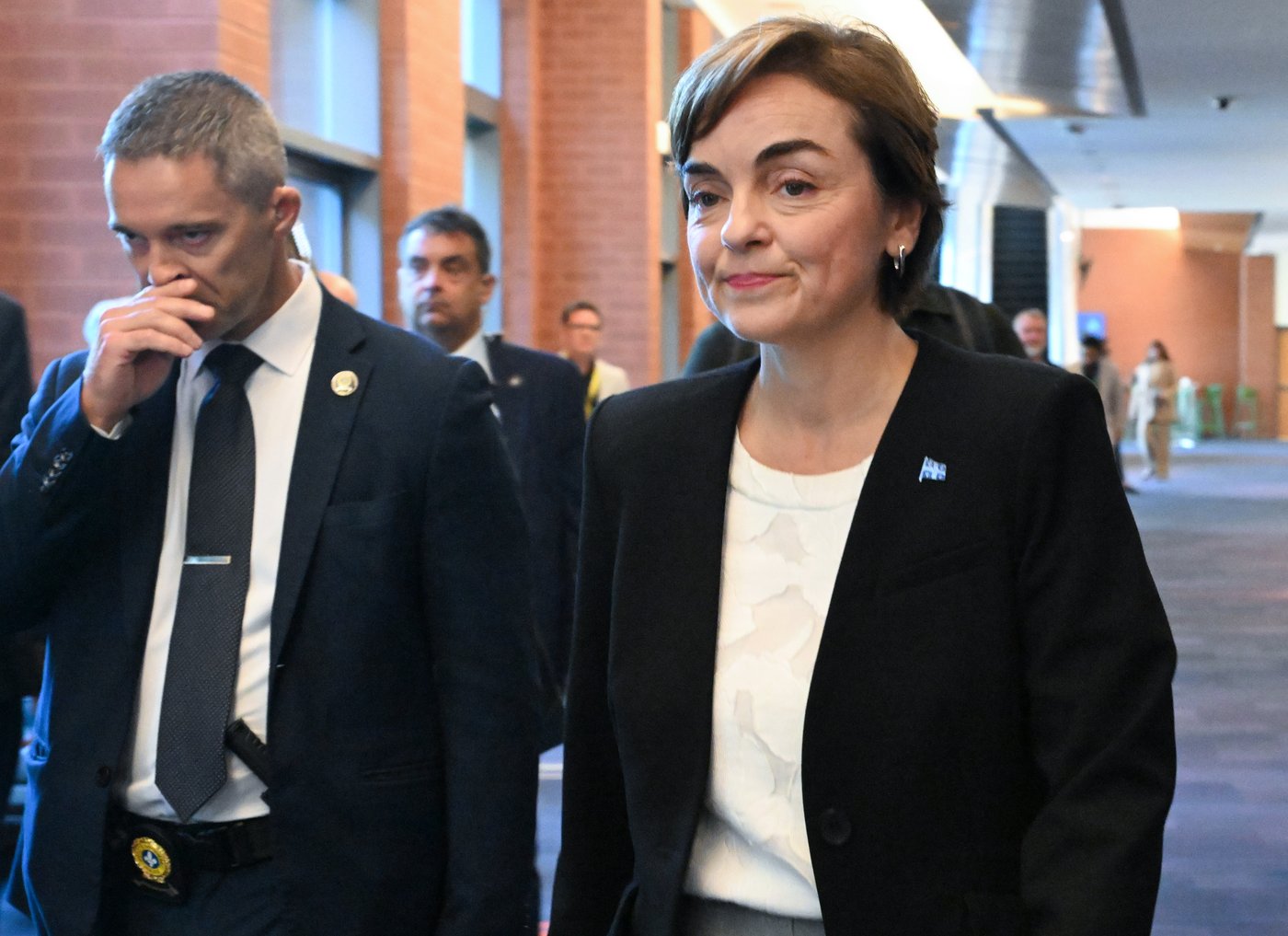
Coalition Avenir Québec Leader Christine Frechette walks to speak to reporters while at the Federation quebecois des Municipalities (FQM) in Quebec City, Friday, Sept. 25, 2026. Quebecers are going to the polls fro a general election on Oct. 5. THE CANADIAN PRESS/Jacques Boissinot

Que. opposition leaders call claims of U.S. interference a fear campaign, ‘Hail Mary’

Sep 26, 2026 | 3:00 AM

MONTREAL — Claims of American interference continued to churn on the Quebec campaign trail Saturday, the eve of the start of advance polling ahead of the Oct. 5 election.

“I mostly want to raise awareness among Quebecers to the situation that could occur. For now, there hasn’t been interference, it hasn’t happened. But nonetheless, it looks like there could be attempts from American interests to destabilize Canada, to destabilize Quebec,” Coalition Avenir Québec Leader Christine Fréchette said while campaigning in Gatineau.

The allegations already dominated the electoral discourse on Friday as Fréchette expressed concerns that Americans were trying get the sovereigntist Parti Québécois elected to destabilize Canada.

Following skeptical responses from her rivals, she maintained those concerns on Saturday, nuancing that there was no proof of interference in the upcoming elections.


She tied her concerns with the PQ’s promise to hold an independence referendum in their first mandate.

“Holding a referendum, it would play into the American’s hands. And that raises questions,” she said.

PQ Leader Paul St-Pierre Plamondon has said his party would not hold a referendum while Trump is in office.

Fréchette’s comments on Friday followed a news report by Quebecor media quoting two unnamed sources from the CAQ government who said American officials had reached out to Quebec to negotiate tariffs directly.

The report also spotlighted a February essay by a U.S.-based think tank, the Defense Analyses and Research Corporation, that called for Americans to destabilize the Canadian federation.

Fréchette said she had recently learned about essays published by the think tank, prompting her party to contact the Canadian Security Intelligence Service. She said the federal intelligence agency arranged a meeting last Wednesday.

Federal Foreign Affairs Minister Anita Anand said Friday she had not seen any proof of foreign interference in the election but was taking the allegations seriously.


St-Pierre Plamondon, who was campaigning in Saint-Augustin-de-Desmaures in the Quebec City area, floated the idea on Saturday that Fréchette’s party intentionally leaked the information about foreign interference to the media.

Asked about this accusation, Fréchette did not directly answer, and she defended her government’s approach to trade negotiations.

“What the article is based on is a fact,” she said, adding that the think tank’s essays were already public.

Her rivals were quick to highlight the lack of clarity around how immediate the risk of U.S. interference in the Quebec election really is.

St-Pierre Plamondon said the CAQ was throwing a “Hail Mary.”

“I’ve never seen this level of bad (political) theatre. It’s typical of the last stretch of the campaign for a party that is becoming desperate,” he said.

Éric Duhaime, Conservative leader, accused the CAQ of running a fear campaign.

“If the CAQ’s campaign is in bad shape today, it’s because they’ve been trying to scare people since the beginning. They started with Trump — that didn’t work. Then they tried with us,” he said.

“That didn’t work. Now, they’re trying with interference.”

Québec solidaire Leader Ruba Ghazal said the interference claims fit into what she called the CAQ’s tradition of lacking transparency.

“First, she’s going to discuss with Mark Carney. Then, there’s no reason to be worried. It’s important, in order to reassure people, to be transparent,” she said.

Liberal Leader Charles Milliard also called for clarity.

“Was she (Fréchette) aware (of a possible interference) or not? Could she have told us, as party leaders?” he asked.

This report by The Canadian Press was first published Sept. 26, 2026.

Marieke Glorieux-Stryckman, The Canadian Press