Get the Top, Local stories delivered to your inbox! Click here to join the daily Vernon Matters newsletter.
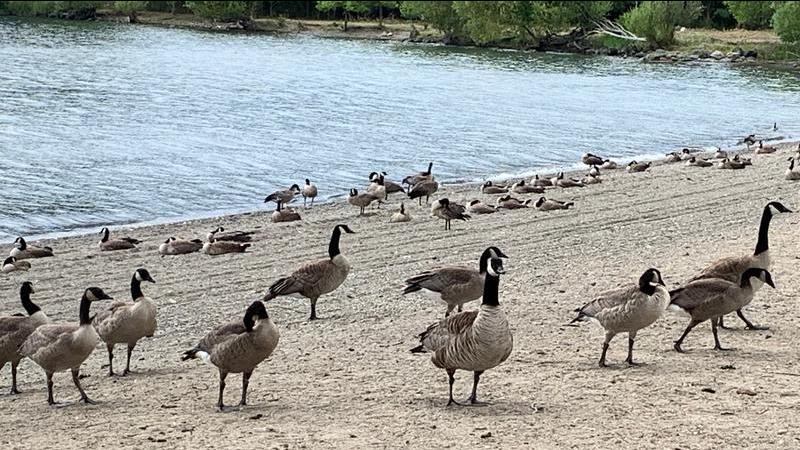
Geese at Kin Park (Vernon Matters photo)
using the meat

Goose management plan would see birds harvested

Mar 12, 2024 | 5:00 AM

A proposal for dealing with the resident geese in Vernon would see all parts of the animals used.

The organization Guardians Of Our Salish Estuaries (GooSE) made a presentation to Vernon city council Monday, March 11, to outline how it could control the local goose population through a harvest.

“What our organization specializes in, and has a unique approach to, is our First Nations-led Canada goose harvest,” Garreth Ashley, a wildlife biologist with Guardians Of Our Salish Estuaries, told council.

“This entails the ethical harvest of adult Canada geese in order to reduce those hyper-abundant invasive Canada goose populations that are a concern.”


He noted goose hunting had been a “great mitigation option” in the past, but those opportunities have dwindled over the past few decades due to urban expansion and fewer people hunting the birds.

Through GooSE’s operations, the animals killed would be fully harvested.

“Our main approach has been working with First Nations and utilizing that meat,” Ashley explained, noting the meat would either be frozen, made into sausages, cooked, dried, canned or smoked.

The meat harvested through the operations would primarily be accessible to the First Nations partners, but could also be donated to food banks or soup kitchens, or served at charitable events related to conservation of migratory birds. Ashley noted his organization has created a selection of recipes to go along with specific parts of the bird.

He added the down has also been used by First Nation partners in the past, and similar agreements could be made should the organization be chosen to run the goose management program in Vernon.

Ashley stated goose management is an important piece of work to undertake, as large populations can affect the accessibility of public places, including parks, walkways and sports fields; can have negative impacts to both natural and agricultural lands; can pose a health hazard to the general public through their droppings; and they can contaminate reservoirs and watering holes.

A preliminary survey of Vernon’s goose population found they mainly live in or around Kin Beach, especially around where Vernon Creek feeds into Okanagan Lake, Paddlewheel Park, Polson Park, and local agricultural lands.

Before a goose harvest could be undertaken, GooSE representatives would need to visit Vernon to do a population survey, and then apply for a permit from the federal government. Ashley stated the survey could be done during the summer of 2024, and then an application could be filed for the next year which, if approved, would allow for the harvest do be conducted in 2025.

It was noted that the harvest would be done over the summer months, so as to not inadvertently kill migrating geese.

GooSE had not reached out to the Okanagan Indian Band, other municipalities, or other stakeholders about their possible work before presenting their pitch to Vernon council, but indicated they could approach potential partners when visiting Vernon to survey the bird population.

Council accepted the proposal for information at Monday’s meeting.

GooSE has overseen harvest operations in several communities on Vancouver Island in the past, to which Vernon’s mayor said was successful in addressing problematic goose populations.

“They have developed a very well-functioning goose harvest program, and they use the meat. And what that’s done is brought the numbers back way down and therefore lowered the environmental and economic impact of the geese and upgraded the quality of parks because the geese numbers are down,” Mayor Victor Cumming told Vernon Matters following Monday’s meeting.

Should the City of Vernon decide to move forward with GooSE’s proposal, local activities would continue while the preliminary work is undertaken, including egg addling.

“That means you find the eggs and you give them a shake and you put a little felt pen mark on it so you know you gave that one a shake,” Cumming explained.

“But, we haven’t been able to find as many nests as [there are], and the population, every single year in the past five years, has been growing. So we’re trying to say ‘now what do we do?'”

Cumming indicated the city would continue to investigate other goose management processes being done in other municipalities before making a decision on how to proceed with the local birds.

View Comments