Get the Top, Local stories delivered to your inbox! Click here to join the daily Vernon Matters newsletter.
Winter tires (photo courtesy of the B.C. Government/Flickr)
Swap Out Summer Tires

Winter tire laws take effect Oct. 1

Sep 25, 2023 | 2:14 PM

North Okanagan motorists are reminded to change their tires.

Effective Sunday, October 1, winter tires will be required when traveling on many provincial highways, including Highways 97, 97A, 6 and others in the North Okanagan and the Interior.
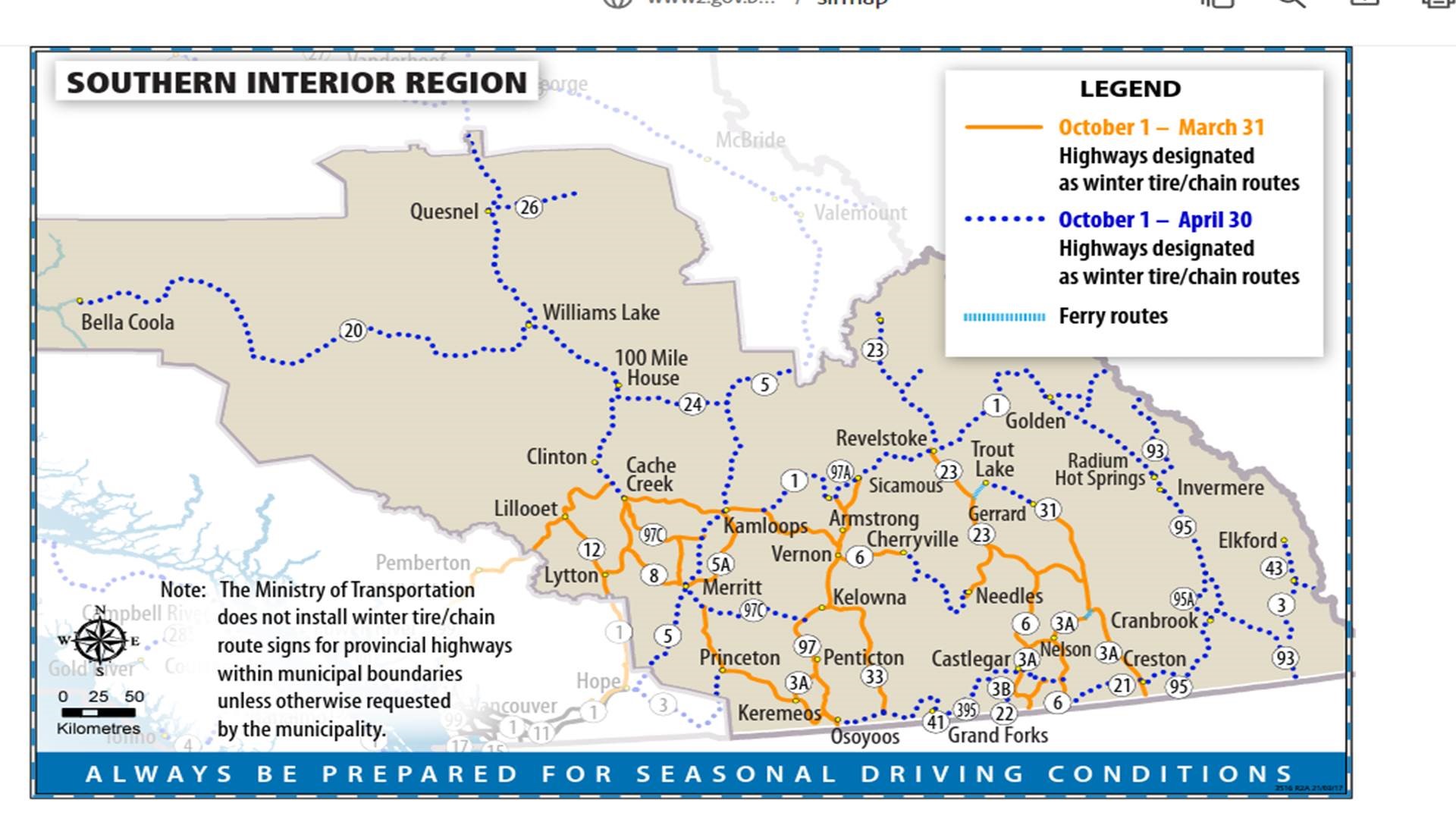
Highways in the Interior where winter tires are required effective October 1 (image courtesy of Road Safety at Work)

“Driving for work or pleasure can be dangerous, no matter how much experience you have,” Trace Acres, Program Director for Road Safety at Work and spokesperson for the 15th annual Shift into Winter campaign, said.


“Conditions can change quickly and you need to prepare now to help keep yourself and your passengers safe.”

The road safety advocacy groups said the number of crashes in B.C. caused by driving too fast for conditions doubles in the fall when the days shorten and the temperatures cool.

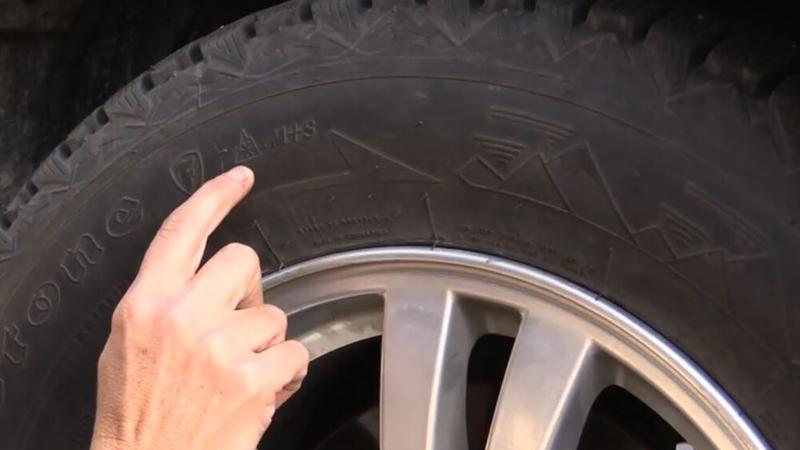
Winter tires, marked with the three peaked mountain and snowflake, can help reduce the number of crashes as they provide better traction and stopping distances when temperatures drop below 7°C.

“They can’t help you if you don’t have them on your vehicle before poor weather arrives, though,” Acres said.

“Waiting until rain, ice, or snow hits is too late.”

Tires displaying the three-peaked mountain and snowflake symbol, and M+S (mud and snow) tires both meet the legal requirement for driving on highways in the winter as long as they have at least 3.5 milimetre of tread, though Road Safety at Work did state the winter tires perform better than M+S tires in cold and snowy conditions.

Along with changing tires, motorists are advised to change their driving habits.

“Even if you’re only on the road for a few minutes, you need to prepare for winter driving hazards,” Acres said.

“When conditions are treacherous, it’s better to postpone your trip, if you can. Your family would rather have you safe at home than have you hurt in a crash.”

The agency recommends people:

  • Prepare their vehicles by installing winter tires and ensuring vehicles are working properly by having the fluids topped up and wiper blades in good condition.
  • Prepare themselves by checking route information on DriveBC, giving extra time for travel, and postponing non-essential travel in poor conditions.
  • Drive to conditions by slowing down, allowing lots of space between vehicles, and using lights in low visibility situations.

The winter tire regulations remain in place until March 31 on lower elevation highways and until April 30 on mountain routes.

View Comments