Get the Top, Local stories delivered to your inbox! Click here to join the daily Vernon Matters newsletter.
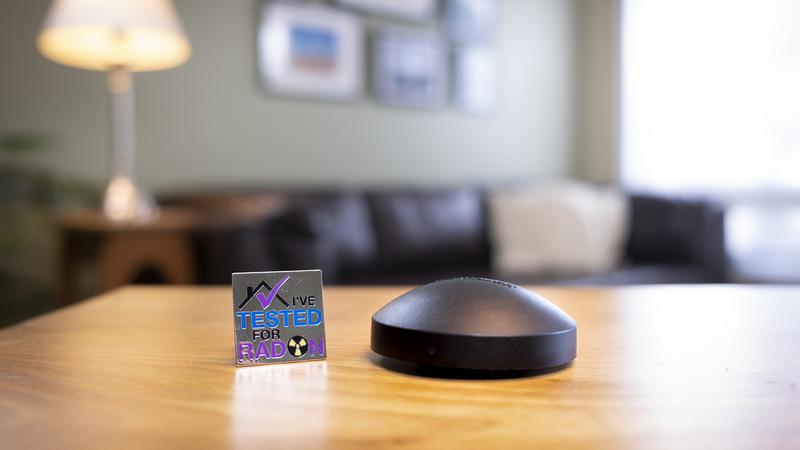
Radon detector (photo courtesy of Health Canada's Take Action on Radon initiative)
27% classified as medium, 3% as high

Indoor radon gas levels for 27 per cent of Vernon classified as ‘medium’: BCCDC

Nov 5, 2021 | 12:07 PM

A new interactive tool to compare radon levels in communities shows that over a quarter of Vernon residences have medium levels of radon.

The B.C. Centre for Disease Control’s (BCCDC) new tool shows that, based off 476 samples taken from the region, 27 per cent of Vernon area homes have medium levels of radon and three per cent of homes tested have high levels.

Though 30 per cent of the area residences have medium to high levels of radon, the data shows the median radon level for the Vernon area to be 130.352 Bq/m3, or becquerels per cubic meter, which is the unit used to measure radon concentration in a volume of air. The BCCDC has four ranks of radon concentration: 0-100 is very low, 100-200 is low, 200-600 is medium, 600+ is high.

The Central Okanagan’s median level was recorded at 119.993 Bq/m3, while Armstron/Spallumcheen’s was noted as being 129.539, and Salmon Arm’s was recorded at 96.872. There was insufficient data to compile a figure for Enderby.

Radon is the leading cause of lung cancer for non-smokers and second leading cause in smokers.

The BCCDC says prolongued exposure to medium levels of radon increase the risk of developing lung cancer by two per cent, or 17 per cent if you smoke.

Exposure to high levels of radon increases the risk of lung cancer by four per cent, but that increases to 26 per cent for smokers.

The BCCDC notes that radon is a natural radioactive gas with no smell, taste or colour, and that the best way to measure it is with a long-term testing device that requires at least 90 days of use.

Radon is released by uranium naturally decaying underground, and the BCCDC states that radon levels will be higher on ground floors or in basements, and recommends that’s where people set up their tests.

People can also protect themselves from radon through preventative measures such as sealing off openings where radon can enter a home such as cracks in the floors and basement walls; renovate basement floors, especially earth floors; paint basement floors and foundation walls with two coats of paint or sealant; and improve airflow in the winter by using a heat recovery ventilator.

View Comments