Get the Top, Local stories delivered to your inbox! Click here to join the daily Vernon Matters newsletter.
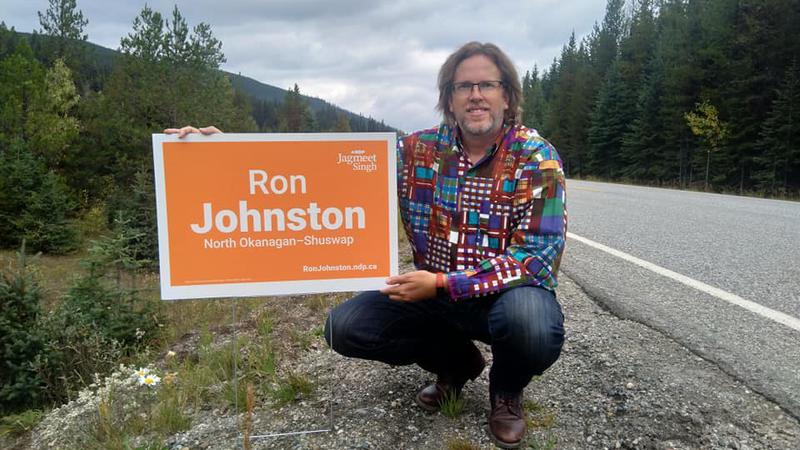
Photo courtesy of Ron Johnston, the North Okanagan - Shuswap NDP cadidate (Facebook)
Election 2021

Johnston says NDP has plans to address key issues in North Okanagan-Shuswap

Sep 17, 2021 | 5:02 AM

Editor’s note: This is the fifth in a series of articles on the five North Okanagan-Shuswap federal election candidates, running in alphabetical order.

Ron Johnston has his name on the ballot for the first time as he runs for the New Democratic Party in the North Okanagan-Shuswap riding for the 2021 federal election.

Johnston, who is originally from Calgary, moved to Salmon Arm in 2000 for a job opportunity in his field of mechanical engineering. He the moved to Prince George for four years, but returned to Vernon eight years ago.
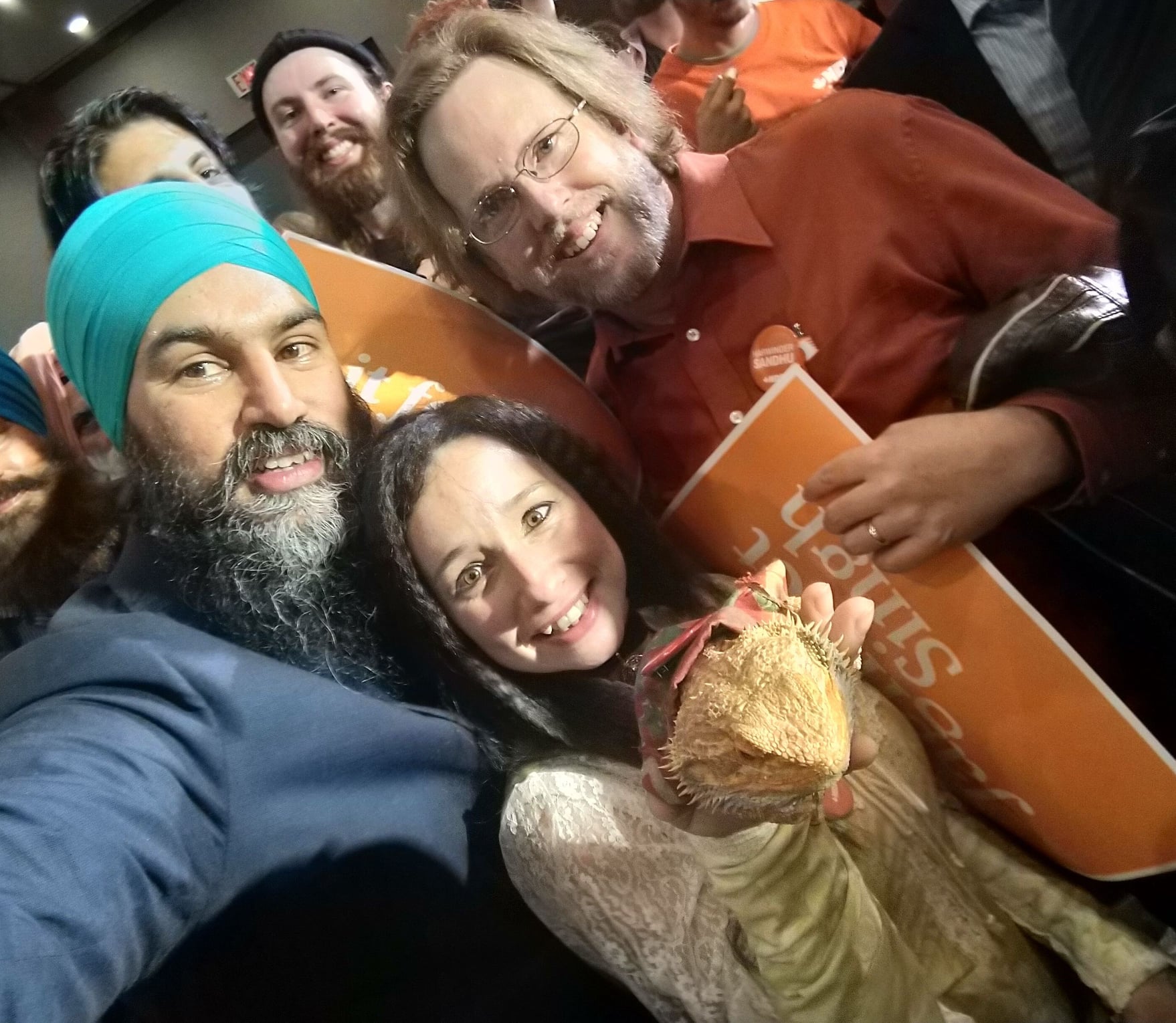
Ron Johnston with NDP Leader Jagmeet Singh (Submitted photo/Ron Johnston/Facebook)
Johnston told Vernon Matters that he started getting involved in supporting the NDP when he moved to Vernon, and has worked on a number of campaigns, including helping out on the social media and signage side of Harwinder Sandhu’s 2020 campaign.

Johnston said he decided to get his name on the ballot during the COVID-19 pandemic after seeing how it hit people including his own family.

“Things in all areas are just getting more challenging than ever, particularly around affordability and that kind of thing. So I just figure it was time to step forward and try to get more working class people into politics.”

Johnston told Vernon Matters that he sees a few issues being especially important for North Okanagan-Shuswap residents, namely climate change, affordability, housing; and Indigenous reconciliation.

The candidate said the NDP have plans to address all of those issues, and started by outlining the plans for tackling climate change, which Johnston said is a top priority for him as he has children and would like to make the world a better place for them.

“So the NDP is committed to act swiftly to reduce greenhouse gas emissions by 50 per cent from their 2005 levels by 2030, and move to 100 per cent non-carbon-emitting electricity by 2040,” stated Johnston.

“It’s also important that we eliminate fossil fuel subsidies, both those that are direct and through tax credits, and then we can essentially transfer those funds into building up [research and development] and transitioning into greener, cleaner energy sources and making sure that all our workers have the training they need to make that move.”

He added that training people to get them out of the fossil fuel industry and into green technology development is also part of the NDP’s plans.

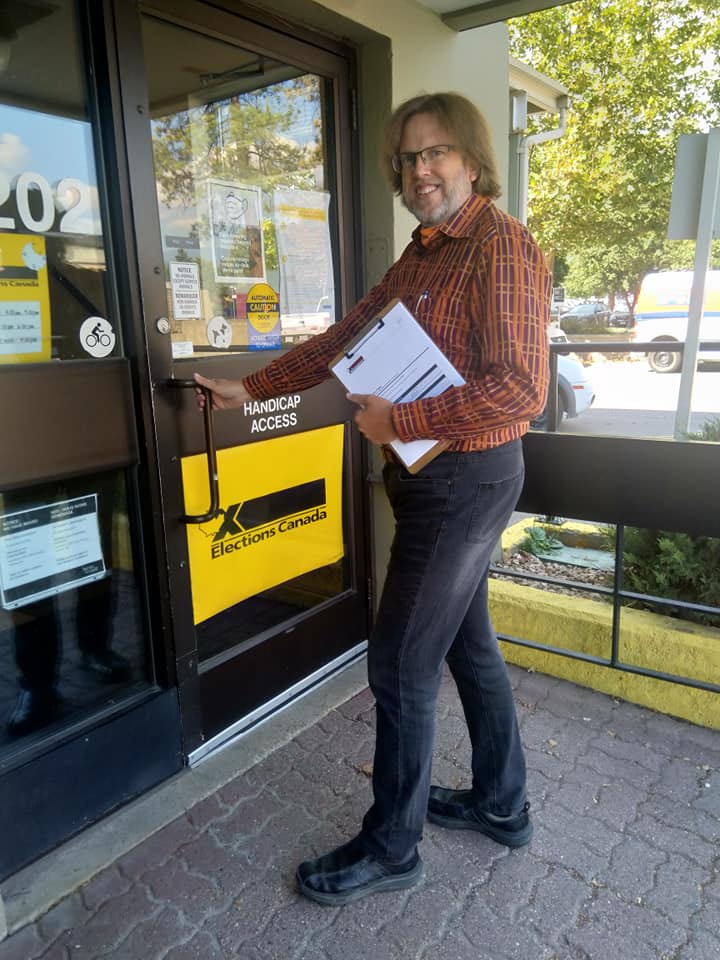
Ron Johnston at the Elections Canada office (Submitted photo/Ron Johnston/Facebok)

Johnston also said getting people into technology-based green energy will be better for the average worker, because traditional resource industry jobs tend to be location-specific.

“The jobs tend to be where the resource is, or where it’s processed or where it’s used, and you have these clusters of good opportunity and employment and a lot of economic development in certain areas. Whereas when it’s technology-based green energy, it’s not location specific. You can set up those industries anywhere that it makes sense to do so.”

Johnston adds that this means more job opportunities can be created in communities across the country, including in Vernon and the North Okanagan.

On the topic of a carbon tax, Johnston said the federal NDP would continue along the same lines as the Liberals and increase the price to a maximum of $170/tonne.

Moving the conversation on to the topic of affordability, Johnston said the New Democrats have plans to build more affordable housing across Canada, as housing is one of the biggest expenditures a person can face.

“Close to two-million people pay more than 30 per cent of their income on housing, that’s Canada wide, so the biggest issue is the lack of supply of housing units, which is very apparent here. We are very close to a zero vacancy market here in Vernon,” said Johnston.

“So our commitment there is basically to build 500,000 units of affordable housing over 10 years with half of that being created over five [years]. We would create incentives to drive the construction of new affordable dedicated rental units, that would include things like no GST for builders and developers that are working on that kind of project. And we would provide rent relief for struggling families and introduce a foreign buyers tax.”

He adds that creating more affordable rental supply will help people who are otherwise being forced to rent something outside their budget.

Telecommunications is another aspect of affordability that the NDP plan to address, as Canada’s telecom prices are some of the highest in the world.

“So we would want to put a price cap on cell phone and internet costs and, since the Canadian government has already decided for us that you need to have a CRA account and all of this stuff, they have essentially said that it’s essential to have internet if the only way to access services is through the internet. So we would declare high-speed internet an essential service and make sure we expand coverage to every community in Canada.”

Johnston added that a lot of people, including himself, relied more heavily on the world wide web as they moved work and schooling to online at-home models, which again underscores the importance of having high-speed access for all Canadians.

Johnston said another key issue for the North Okanagan-Shuswap riding is Indigenous rights and Truth and Reconciliation. He told Vernon Matters the first thing the NDP would do to address this issue is by taking steps to implement all 94 of the Truth and Reconciliation Commission’s Calls to Action, though he does say this would be a long process and involve a lot of work with individual Indigenous communities.

“In addition to that, we are committed to fully fund the exploration of the former residential school sites to make sure that all of those grave sites are explored and bring some closure to the families that have lost children and never had those answers.”

Johnston said some of those projects are already underway, but the NDP would support that work with funding, and would also back it up by requiring church and government to hand over any records that could help in identifying those in the grave yards.

Johnston added the NDP also want to give Indigenous communities more control over child welfare systems.

“Currently Indigenous children are over-represented in child welfare systems, so we would be partnering with provinces to try to work out solutions to that,” said Johnston.

“Also, the work that was started [to provide] clean water to Indigenous communities needs to be finished because the Liberal government kind of stopped work on that during the pandemic, and we’re definitely committed to completing that and making sure that all communities have access to clean drinking water and put an end to some of these many-years-long boil water advisories.”

Moving on to the COVID-19 pandemic, Johnston said, if elected, the NDP would continue to listen to the science and public health recommendations that come from the federal and provincial public health officers. He said the federal NDP doesn’t have plans to implement a COVID-19 Vaccine Passport, but would support and work with provinces that choose to implement their own proof of vaccination record programs.

He added the NDP would also work with provincial partners to make sure health care systems are fully staffed and funded.

Another key point of the NDP plan is a Pharmacare program.

“So many seniors and disabled and low-income Canadians do not have access to the drugs they need for optimal health or even survival, and we want to make sure everyone has that,” said Johnston.

“[Pharmacare] is basically part of our head-to-toe health care plan. We want people to have access to that, we want people to have access to more mental health supports and things like eye care and dental care and things that aren’t currently part of the health care plan, but we want to have head-to-toe health care.”

Johnston went on to say that, in order to pay for all these programs, be it improved health care, supporting training to move people to green technology jobs, and supporting small-businesses in training and hiring people, the NDP would try to bring in new revenue streams “that won’t come off the backs of small businesses and middle-class workers.”

“So we want to close all the tax loopholes that the Liberals had promised to work on six years ago but haven’t yet, and implement a tax on the super wealthy so they pay their share, that’s both corporations and individuals,” said Johnston.

“People get worried when they hear that term ‘super wealthy’ because they think if they’re relatively comfortable in life that that might mean them, but in reality it means the truly super wealthy, the Amazons and those companies that made huge profits off the pandemic, so it’s only fair that they should pay for some of the recovery.”

The NDP also proposes a new luxury goods tax, and, along with eliminating fossil fuel subsidies, which Johnston said will free up billions of additional dollars to be spent on services and programs.

He added that there doesn’t need to be a choice between paying less tax and getting less services or paying more to get more.

“There’s always choices to look at how you’re spending your money and that you can make choices to spend differently or spend better, and it doesn’t always mean that it’s literally one or the other. It’s not a black and white case like that.”

Johnston also told Vernon Matters that Canadians want to see an accountable government who will listen to the public and implement changes that improve people’s lives, and believes that the NDP can be that party.

Previous profiles:

Mel Arnold Conservatives

Kyle Delfing People’s Party

Shelley Desautels Liberal

Andrea Gunner Green Party

View Comments