Get the Top, Local stories delivered to your inbox! Click here to join the daily Vernon Matters newsletter.
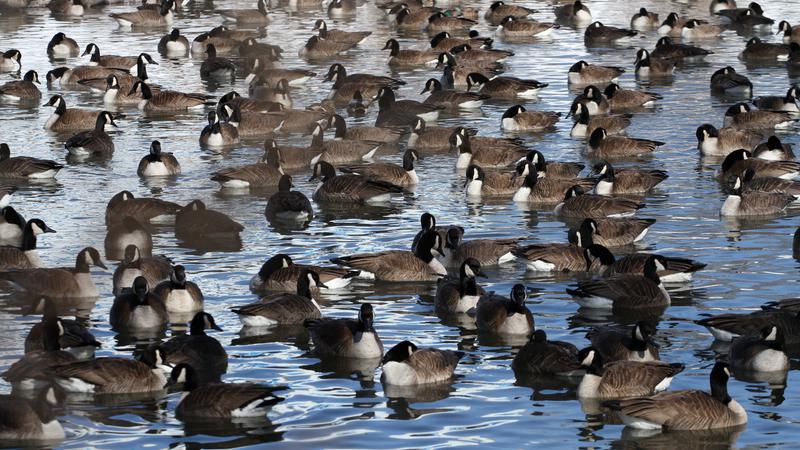
Canada Geese congregating .(Photo 51883118 © Framed1 - Dreamstime.com)
City votes for cull program

Vernon will seek permits to cull resident Canada Geese

Jan 26, 2021 | 5:45 AM

The number of resident, non-native Canada Geese in the North Okanagan has finally tipped the political scales in favour of killing off part of the local population.

A motion by Coun. Dalvir Nahal to euthanize 100 to 150 birds at an estimated cost of $41,000 has passed Vernon council, with an emphasis on Kin, Lakeshore, Paddlewheel and Polson parks.

Cull or kill programs of wildlife (deer and geese) have proved to be unpopular with the public, but are considered necessary by many wildlife biologists.

“I cannot believe the amount of letters of support I have gotten from the public,” Nahal said.

South Okanagan biologist, birder, author of several bird books, and MP for South Okanagan-West Kootenay Richard Cannings, said it has been a problem since non-native geese were first introduced to the Okanagan in the 1970s.

Cannings remembers when the biologist in charge the program spoke to their class at UBC in 1972.

“He said it had been such a huge success in the Fraser Valley, that a hunting season would be allowed. On opening day, there were about 1,000 geese and seven were shot. They learned very quickly to sit in school yards and golf courses where they couldn’t be shot,” Cannings told Vernon Matters.

Prior to the introduction, the only Canada Geese in the Okanagan were migratory birds landing at Vaseux Lake, in the South Okanagan, he said.

To try control the population, an egg addling program was started 15 years ago.

In 2020, 70 nests were found in the Vernon area, compared to 20 in an average year, part of the issue with addling is that many nests are on private land.

The Canada Goose Management program uses egg addling — or shaking eggs — to reduce the population between Vernon and Osoyoos which currently stands at around 2,500 birds, according to the program. An estimated 17,000 eggs were addled during the first 13 seasons of the program.

“If you are addling 2,000 eggs a year, you are only addling about 10 per cent of the population, so that’s why it’s such an intransigent problem, in that it’s hard to affect the population with a program like that, probably with limited resources, limited staff and limited time,” Cannings said.

Cannings suggested a cull of 100 to 150 birds will have very little impact on the overall population, and that a more aggressive control program would be required to see true results.

“You would have to keep doing that every year, because they are breeding, and coming in from Kelowna and the Shuswap and every place. When you have a situation like this, you have to just do quite a lot of work and keep doing it every year,” Cannings said. “So in killing a lot of geese every year, it’s difficult. I’m not trying to belittle the problem in the parks and so on, but it’s not just logistically difficult, it’s politically difficult.”

The problem is less pronounced in the Central and South Okanagan where egg addling and other control measures are also taking place.

Vernon council will write to jurisdictions to the north that haven’t taken part in control measures to join the effort to bring the goose population under control.

Nahal would also like to see the provincial government get involved as the issue isn’t isolated to just one municipality.

“To me this is an unpleasant duty, but it’s a duty. Kin Beach is unusable, Marshall Fields are just covered in manure and Polson Park is unusable,” Coun Scott Anderson said.

While migratory and resident Canada Geese look very similar, they don’t generally interbreed, and resident geese never learn about migration from their parents.

Resident geese also have a lower mortality rate, longer lifespan (up to 30 years), nest earlier and produce more offspring than their migratory cousins.

The federal and provincial government must grant permits for the cull to move forward.

View Comments