Get the Top, Local stories delivered to your inbox! Click here to join the daily Vernon Matters newsletter.

Finance minister unveils Ottawa’s ‘follow the money’ plan to tackle extortion

Feb 19, 2026 | 9:42 AM

OTTAWA — The federal government is bringing law enforcement and financial institutions together to fight extortion operations targeting Canadian businesses and households.

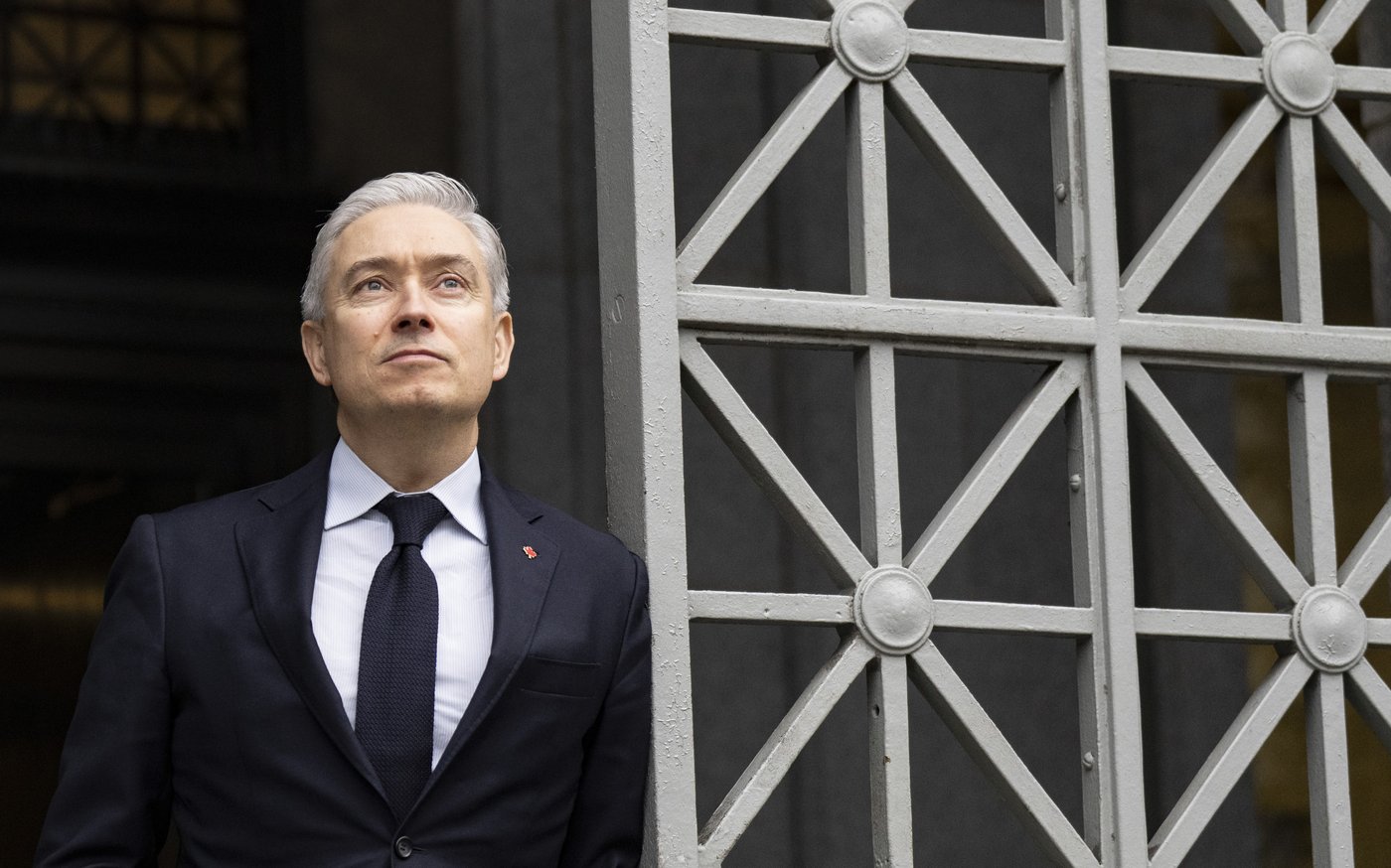
Finance Minister François-Philippe Champagne was in Mississauga, Ont., on Thursday to announce a suite of new initiatives he said will make it easier for police to “follow the money” and disrupt criminal networks.

Champagne said organized crime is making Canadians anxious in their own neighbourhoods.

“For too many people, extortion is not an abstract concept anymore,” he said at a press conference.

“It is a threat that is sent through their phone. It is the business owner deciding whether it is safe to open. It is families feeling unsafe in their home communities.”

The government says Canada’s financial intelligence agency Fintrac will put new resources behind tackling extortion. As part of that effort, Fintrac agents will also embed with local law enforcement on the ground to help quickly trace reports of extortion.

Fintrac will also share data with financial institutions to help them flag suspicious transactions.

Champagne said the federal government’s approach of striking a partnership between private sector financial instructions and law enforcement mirrors Ottawa’s model for tackling fentanyl trafficking in recent years.

Prime Minister Mark Carney was in Surrey, B.C., on Thursday meeting with members of the RCMP. He did not take questions from reporters at the event.

Carney said he was there to take stock of efforts to address “the scourge of extortion” in British Columbia’s Lower Mainland and other parts of the country.

The prime minister touted the Liberal government’s efforts to tighten bail and sentencing laws under Bill C-14.

He also mentioned the Liberals’ proposed border legislation, Bill C-2, which includes measures to make it easier for law enforcement to obtain a warrant to get access to electronic messages — a proposal that alarms civil liberties groups.

Carney said those powers are particularly relevant to crimes like extortion, which often involves threats issued via social media.

“We need to give the police, the prosecutors, lawful access to those messages so they can prosecute. And that’s a job for Parliament, and we need to move on that,” he said.

Champagne was asked in Mississauga whether any new money was being committed in Thursday’s announcement.

He didn’t answer directly and said he couldn’t share operational details without the risk of tipping law enforcement’s hand. But he didn’t rule out additional spending.

“My message to Fintrac is, if any additional resources are needed, we’ll be there,” Champagne said.

The finance minister also pointed to the $1.7 billion earmarked in the last budget to support federal law enforcement’s efforts to target transnational organized crime, money laundering and financial crimes. The RCMP plans to hire 1,000 new personnel with the money, with 150 of them tasked with pursuing financial crimes.

The federal Liberals are also planning to table legislation by the spring to set up the Financial Crimes Agency first proposed last fall.

B.C. MP Frank Caputo, the Conservative party public safety critic, said in a media statement that Thursday’s announcement will do nothing to stop extortion and gang violence.

He said Fintrac’s job is already to “follow the money” and claimed the agency has the tools it needs to do that.

Caputo said Conservatives have instead proposed mandatory jail time for extortion and gun crimes and deportations of non-Canadians who commit acts of violence.

Non-Canadians found guilty of serious crimes can already be barred from Canada under existing laws.

The federal government convened a pair of summits in Brampton, Ont., and Surrey earlier this year and in late 2025 to hear about how threats of violence are affecting communities.

Peel Deputy Police Chief Nick Milinovich told Thursday’s press conference that “extortion is one of the most serious public safety threats that faces not only Peel region, but our country on a national level.”

He said there were 476 reported incidents of extortion in Peel last year, 190 of which targeted businesses. Of those 190 incidents, 29 led to shootings or arson.

“That is not just a statistic. It represents hundreds of people who are living in fear and forced to live with the experiences they’ve had,” Milinovich said.

Most of the businesses targeted for extortion are in Peel’s South Asian community, Milinovich added. He said tracking the sources of financial crimes leads police to people “responsible for extortions and a variety of other transnational crimes.”

Ottawa last year designated the Lawrence Bishnoi gang as a terrorist group. The gang, which RCMP say has targeted Sikh separatist activists in Canada on behalf of the Indian government, has been linked to extortion and other crimes against South Asian communities in B.C., Alberta and Ontario.

Carney referenced Ottawa’s move to list the gang as a terrorist entity when he spoke to RCMP officers in Surrey on Thursday.

“Part of our work … is to improve co-operation amongst law enforcement and security organizations so we get the information from these — I can put it this way — host governments of these transnational gangs,” he said.

Champagne was asked whether Canada will raise extortion by South Asian gangs as an issue during Carney’s upcoming visit to India.

The minister said “there’s a lot to be discussed with our Indian partners” but did not say whether extortion and transnational crime would be on the agenda.

The transnational nature of these crimes is something that we have been discussing at the G7,” Champagne said.

“The RCMP and other law enforcement partners have all the relationships with their counterparts and we expect them to continue these relationships so that we can tackle crime in the most effective way.”

This report by The Canadian Press was first published Feb. 19, 2026.

— with files from Brieanna Charlebois in Surrey

Craig Lord, The Canadian Press