Buzz-worthy research from UBCO could help farmers grow better harvests
-
Share on Facebook
-
Share on Bluesky
-
Share on X
- Copy Link
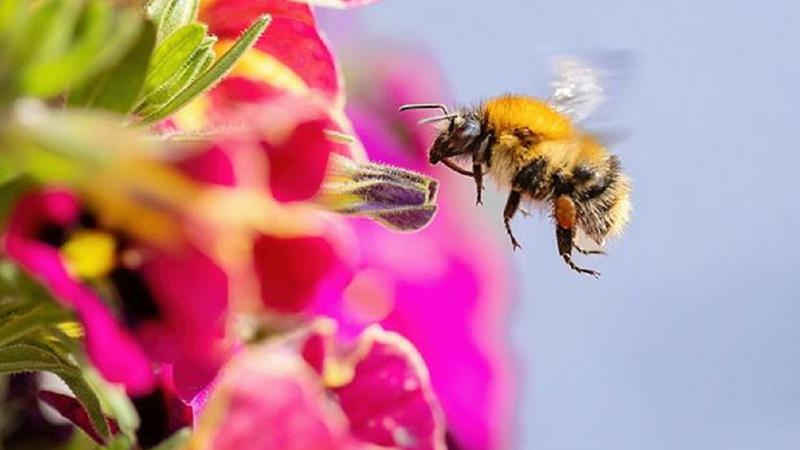
New research from UBC Okanagan could give farmers a powerful tool to improve crop yields by supporting the health of local bee colonies.
The study, published in the Bulletin of Mathematical Biology, introduces a computer model that simulates how bumblebee colonies manage their energy and forage for food across changing landscapes. Researchers say it offers insight into what helps—or hurts—long-term colony survival and pollination.
“Farmers rely on bees to pollinate many of the crops we eat,” said Dr. Eric Foxall, a professor in UBCO’s Department of Computer Science, Mathematics, Physics and Statistics. “This model helps us understand what bees need to stay healthy and do that work well.”
The model was developed by PhD student Pau Capera-Aragonès, with support from Foxall and Dr. Rebecca Tyson. Instead of focusing on individual bees, it looks at how the colony acts as a unit—gathering nectar and pollen while managing limited energy.