Get the Top, Local stories delivered to your inbox! Click here to join the daily Vernon Matters newsletter.
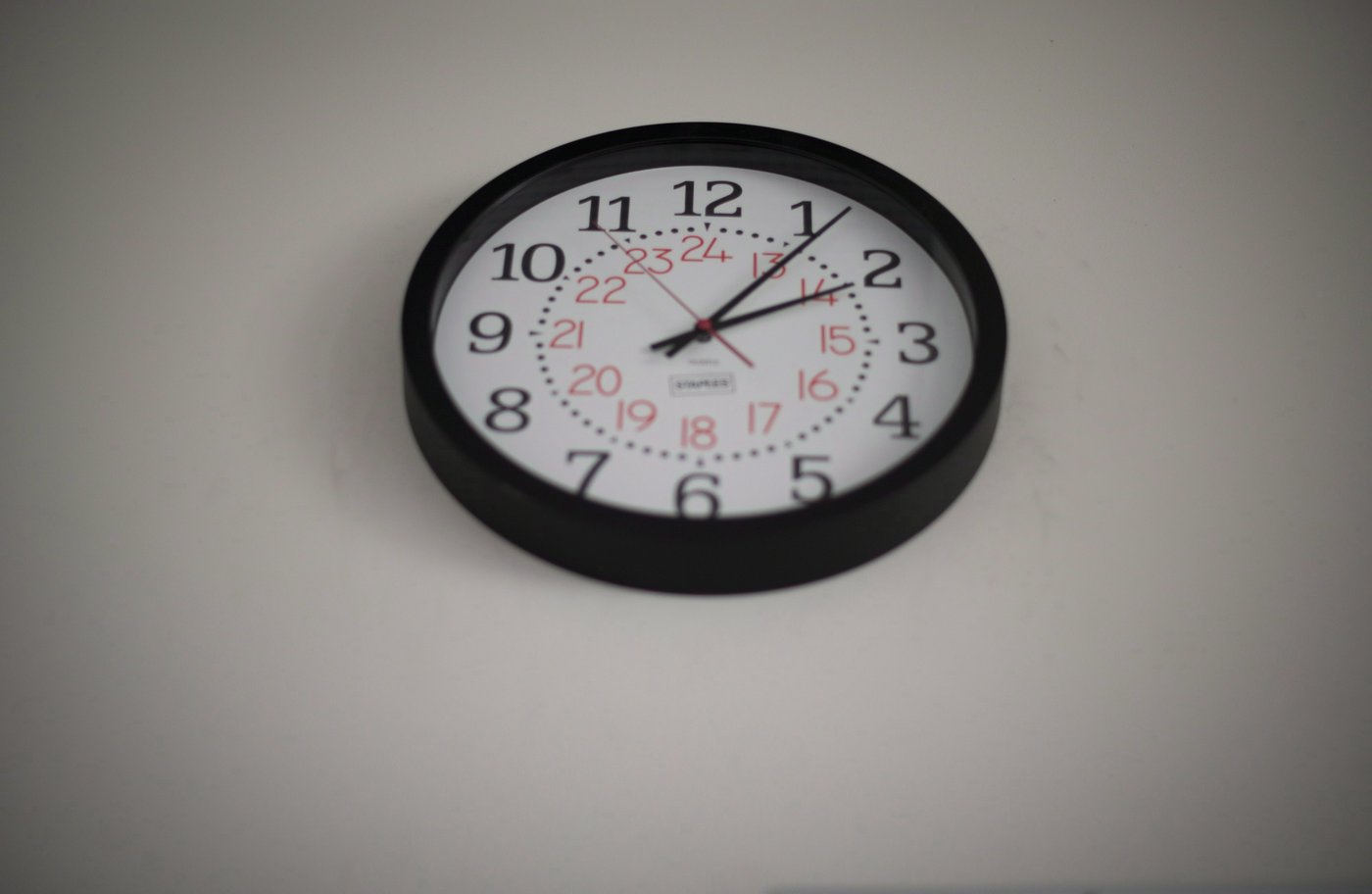
A clock is pictured on the wall at McGee Secondary school in Vancouver, B.C. Friday, Sept. 5, 2014. THE CANADIAN PRESS/Jonathan Hayward The Canadian Press

The Quebec government says it plans to end the time change

Oct 28, 2026 | 7:13 AM

MONTREAL — Quebec Premier Paul St-Pierre Plamondon says his government intends to abolish the time change.

He says the province hasn’t yet decided whether to keep daylight time or standard time year-round.

St-Pierre Plamondon wrote on social media on Wednesday that Quebecers will most likely set their clocks back one hour for the final time this weekend.

He said studies have found the time change is counterproductive to health and is hard for children to adjust to.


St-Pierre Plamondon said he plans to consult with experts during a series of hearings in the coming months before making a final decision on whether to stay on permanent summer or winter time. He said there will be a short parliamentary commission on the topic.

“Dear parents who have to spend several weeks managing your children’s reaction to this time change, this is likely the last year we’ll be imposing such unnecessary constraints on ourselves. We invite the public to follow our work closely,” he wrote on social media.

The previous Coalition Avenir Québec held an online consultation in 2024 that found 91 per cent of the approximately 214,000 respondents said they wanted to end the time change, and 72 per cent wanted to keep daylight time year-round.

But then-justice minister Simon Jolin-Barrette noted that the consultation had highlighted several issues, including expert opinions and alignment with neighbouring jurisdictions.

He said in 2025 that further deliberation and consultation were necessary.

By keeping daylight time year-round, Quebecers would enjoy a later sunset during the winter. But this would mean the sun would rise an hour later during the short winter days, which could have negative consequences, according to several experts.

The analysis published in the Canadian Medical Association Journal a few weeks ago examined multiple studies and concluded that health evidence favours moving to permanent standard time — not daylight time — in part because it better aligns with the body’s rhythm.

If Quebec were to move forward with abolishing the time change, it would follow in the footsteps of several Canadian provinces. Those include British Columbia, Alberta, and Manitoba, which ended the practice this year.

These three provinces have chosen to keep daylight time year-round, as has the Northwest Territories.

In Ontario, certain regions in the northwestern part of the province will also maintain daylight time year-round to align with Manitoba.

In 2020, Ontario passed a law to make daylight time permanent, but it has not yet taken effect. The province noted that coordination with its neighbours, such as Quebec and New York, was essential.

Saskatchewan has not changed its time since 1966, while the Yukon ended the practice in 2020.

This report by The Canadian Press was first published Oct. 28, 2026.

Mathieu Paquette, The Canadian Press