Get the Top, Local stories delivered to your inbox! Click here to join the daily Vernon Matters newsletter.

Carney supports U.S. strikes on Iran ‘with regret’ — what are other leaders saying?

Mar 4, 2026 | 12:03 PM

OTTAWA — Prime Minister Mark Carney said Wednesday Canada supports U.S. and Israeli strikes on Iran “with regret” — making him just one among many world leaders struggling in recent days to respond to a volatile new conflict.

In Australia for a diplomatic and trade mission, Carney called the conflict “another example of the failure of the international order,” citing Iran’s pattern of ignoring UN Security Council resolutions and the failure of the U.S. and Israel to consult with allies before launching the attacks on Saturday.

Israel has since launched strikes on Lebanon targeting Hezbollah, an Iran-backed militant group which fired rockets into Israel after the initial attack on Iran.

While Carney has called for a diplomatic resolution to the war, he has faced criticism at home over his shifting message since he initially endorsed the attacks on Saturday.

Some allied nations are bolstering their defences in the region, while others appear torn between condemning the attacks and voicing support for them.

Here is what some other world leaders have had to say about the war.

United Kingdom

Prime Minister Keir Starmer said on Monday the U.K. will not get involved in offensive operations, but will take defensive actions to stop Iranian missiles.

On Sunday he said British jets had already intercepted Iranian missiles.

Starmer also accepted an American request for access to British military bases in the region, but only for defensive purposes.

Starmer still became a target of U.S. President Donald Trump’s ire on Tuesday. Trump said his British counterpart is “no Winston Churchill” after U.S. troops were not allowed to use British bases for the initial strike on Iran.

The British prime minister has said his country’s forces will work in the spirit of collective self-defence in accordance with international law as Iran engages in a “scorched earth strategy.”

Starmer maintained Sunday that Britain has learned from the mistakes it made when it joined the U.S.-led war on Iraq.

A British air force base in Cyprus was hit by a drone strike Monday. There were no casualties and the damage was described as minimal.

Spain

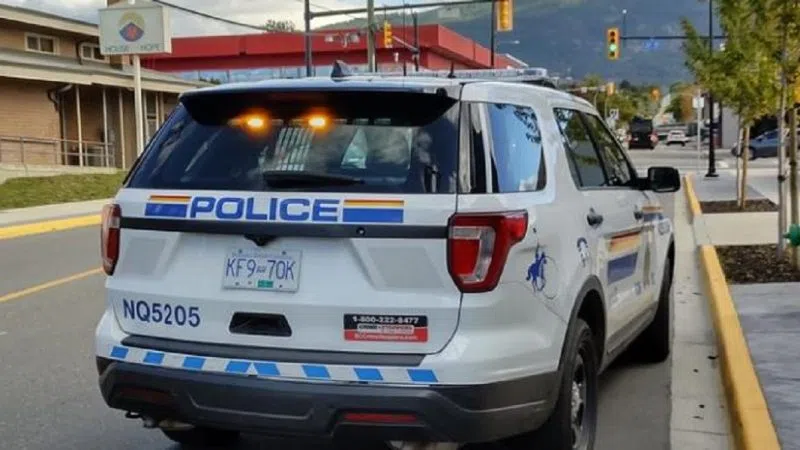
Spanish Prime Minister Pedro Sánchez has been highly critical of the airstrikes, despite Trump’s threats to cut off all trade with the European nation over its refusal to allow the U.S. to use joint military bases in its Iranian operations.

White House Press Secretary Karoline Leavitt said Wednesday afternoon that Spain had agreed to co-operate with the U.S.

Within a few hours, however, Spain’s government had issued a statement denying that it is co-operating with the U.S. on Middle East operations.

Trump issued his threat on Tuesday in response to Spain’s refusal to allow U.S. forces to use joint military bases under Spanish command for attacks on Iran.

“We are not going to be complicit in something that is bad for the world and is also contrary to our values and interests, just out of fear of reprisals from someone,” Sánchez said in a televised address Wednesday.

Trump brushed off Spain’s rejection when speaking with reporters in the Oval Office Tuesday.

“We could just fly in and use it,” Trump said. “Nobody’s going to tell us not to use it, but we don’t have to.”

Sanchez said in his televised address that this conflict could become another drawn-out military quagmire like the wars in Afghanistan and Iraq.

France

French President Emmanuel Macron said in a televised address Tuesday he’d ordered a nuclear-powered aircraft carrier from the Baltic Sea to the Mediterranean to help protect allied assets.

France is taking a defensive posture, alongside the U.K. and Germany, saying it has an obligation to protect assets and allies in the region.

Macron pointed to Monday’s drone strike on a British base in Cyprus, a European Union member, as reason enough to move the Charles de Gaulle aircraft carrier to the Mediterranean Sea.

The Charles de Gaulle is being escorted by French frigates and aircraft, Macron said. He added that French fighter jets, air defence systems and air radar systems are all being deployed to the Middle East.

Macron said that France “cannot approve” of the strikes on Iran because they’re being conducted outside the framework of international law.

Like Carney, Macron has said he wants to see the conflict end as quickly as possible through diplomacy.

Macron said Hezbollah made a “grave mistake” by targeting Israel and putting Lebanese people in danger, but he warned Israel against launching a ground invasion of Lebanon.

Australia

Australian Prime Minister Anthony Albanese has taken an approach similar to Carney’s. He expressed support for the U.S. attack on Saturday, suggesting the campaign will prevent Iran from obtaining a nuclear weapon and continuing to threaten international peace.

Albanese linked two attacks on the Australian Jewish community in 2024 to Iran in his Saturday statement.

While Carney said in Australia that the attack on Iran is “inconsistent” with international law, Australian officials have been dodging that question.

The Australian Broadcasting Corporation reports that Australian Foreign Minister Penny Wong was asked several questions on the legality of the attacks on Iran, but brushed them off by saying the question was a “matter for Israel and the U.S.”

This report by The Canadian Press was first published Mar. 4, 2026.

—With files from The Associated Press.

David Baxter, The Canadian Press