Get the Top, Local stories delivered to your inbox! Click here to join the daily Vernon Matters newsletter.
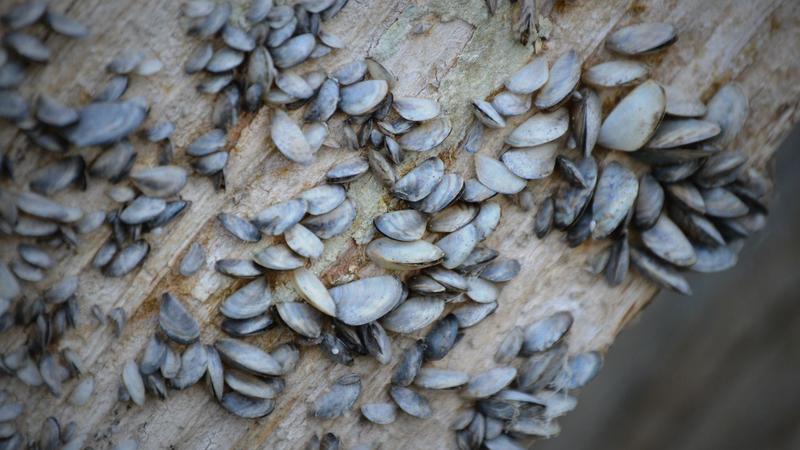
Stock photo (ID 45347522 © Hannah Babiak | Dreamstime.com)
Invasive Mussel Defence

OBWB renews calls for protections from invasive mussels, province says no contamination in 2025

Dec 18, 2025 | 2:08 PM

The local agency that advocates for the protection of B.C.’s and the Okanagan’s waterways have again called for more protections against invasive mussels.

In letters to the provincial and federal government, the Okanagan Basin Water Board (OBWB) asked that more be done to prevent the spread of invasive mussels.

For the province, the OBWB asked for:

  • Regulations for mandatory watercraft inspections
  • Adoption of interim safeguards until mandatory inspection regulations are in place
  • Pursue a Western Canada Mussel-Free Zone

“With zebra and quagga mussels now well established in neighbouring jurisdictions, and the emergence of golden mussels in the western United States, the window for effective prevention is rapidly closing,” the OBWB stated in its letter to B.C.’s Ministry of Water, Land and Resource Stewardship.

“We urge the province to move swiftly from legislative authority to regulatory action and enforcement.”

At the federal level, the OBWB asked for:

  • Funding that match the provincial investments in invasive mussel defence
  • Investments in research and innovation to strengthen prevention
  • Updates to the national risk mapping to include golden mussels
  • Establish public accountability for invasive mussel prevention

The OBWB also renewed its call for the federal government to support the UBC Okanagan’s Rapid eDNA Detection Tool for Invasive Mussel Biosecurity project, which the agency previously said it would support if the government provided $200,000 in matching funds.

“An introduction of zebra, quagga, or golden mussels into B.C. waters would have devastating consequences. The economic, environmental, and cultural losses would be measured in billions of dollars, affecting hydropower generation, irrigation systems, drinking-water utilities, and fisheries across multiple jurisdictions,” the OBWB said in its letter to the Ministry Fisheries, Oceans and the Canadian Coast Guard.

“This is not a provincial issue—it is a national one. Watercraft cross international borders under federal jurisdiction, and the frontline costs of prevention at those borders must not be carried solely by provincial budgets.”

Meanwhile, in an unrelated release, the B.C. Government said there were no indications of invasive mussels being brought into the province in 2025.

The Ministry of Water, Land and Resource Stewardship and the Ministry of Environment and Parks said in a joint release that there were 27,100 watercraft inspections done over the course of the boating season.

Of those vessels inspected, 319 were identified as high risk, 170 were decontaminated, 84 were given quarantine periods to meet the required drying time, and only six watercraft were confirmed to have adult invasive mussels.

The province said lake sampling found none of these vessels brought the invasive species into B.C.

“Lake monitoring is a critical step for early detection of invasive mussels. Sampling started in June for the 2025 season, and to date, more than 864 plankton tow water samples were collected from 84 priority waterbodies in the province,” the release stated.

“All samples tested negative for the presence of invasive mussels and there were no reported introductions of live zebra, quagga or golden mussels in B.C. waterways.”

The province added it was also calling on the federal government to fun the Invasive Mussel Defence Program at federal points of entry, and remained committed to working with partner jurisdictions to prevent the mussels from entering B.C.

View Comments