
Get the Top, Local stories delivered to your inbox! Click here to join the daily Vernon Matters newsletter.
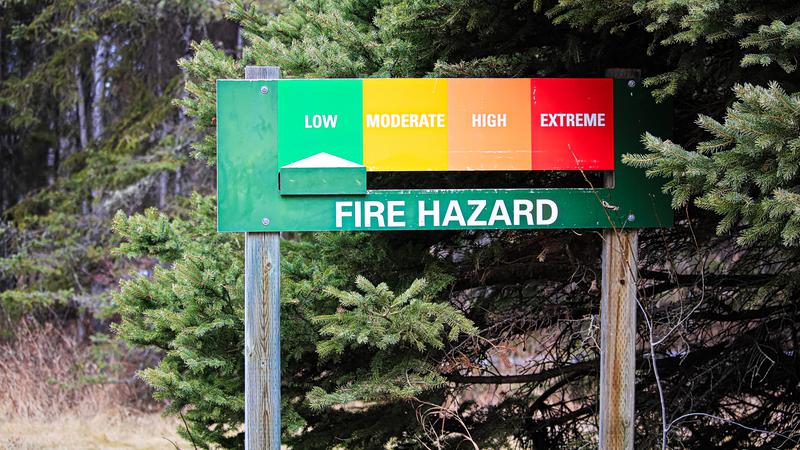
Fire hazard sign (Stock image Photo 94578611 © Amelia Martin | Dreamstime.com)
Wildfire Outlook Forecast

Fire season off to slow start in B.C., but higher risk expected soon

Jul 7, 2022 | 2:15 PM

British Columbia’s current fire season is off to a very slow start, as June’s wet, cool weather helped address droughts and reduce fire risks.

However, there are indicators that suggest the trend may not last too long.

Matt MacDonald, the lead forecaster from the B.C. Wildfire Service, provided the July wildfire forecast Thursday, where he stated that the wetter than normal weather in June helped bring most of the province, including the Okanagan, out of potential drought risks and to above normal levels.

B.C.’s main contributor to wildfires is lightning, which causes 60 per cent of fires annually, and despite seeing 60,428 lightning strikes in June — above the 20 year average of 59,000 strikes — the precipitation and snowpack helped keep the number of fires sparked that way at 30, well below the average of 111 lightning-caused wildfires in June.

These factors have all contributed to a quiet start to the current fire season.

“We’ve recorded 217 wildfires as of July 4, and comparing with our historical numbers, that’s about half the number of wildfires for this time of year,” said MacDonald.

“And they’ve all been relatively small fires, so we’ve only burnt 2,748 hectares so far this season, and if we compare with our 15 (456 wildfires and 28,258 hectares burned) or even 20-year-averages (515 wildfires and 32,382 hectares burned), that’s less than 10 per cent. So suffice to say, it’s been a quiet start to the fire season.”

Looking ahead to the rest of July, MacDonald said information from Environment Canada shows temperatures rising to above normal levels in the latter half of the month. He added that, while difficult to accurately predict, the weather agency is forecasting less precipitation than usual in July, noting that summer rain is usually associated with thunderstorms, which again bring the risk of lightning strikes sparking wildfires.

“We’ll have to see how the precipitation plays out, but we are rather confident that we will be getting into warmer conditions here as we get into the heart of the summer,” said MacDonald.

The Wildfire Service said it takes about two consecutive days with temperatures around 25 degrees, humidity of 30 and winds of 5 km/h for fuels to dry out enough to support ignition, and it takes three to five consecutive days of these conditions for the area to be receptive to holdover fires.

“Even though we’ve seen a slow start to our fire season, all we need is a week or so of warm dry weather, a little bit of wind, and our fuel conditions can change quite rapidly and be receptive to ignitions,” MacDonald explained.

As the remaining summer months will bring a higher risk of wildfires in B.C., the Wildfire Service said it is prepared and ready to mobilize to contain and extinguish fires.

People who wish to take action to protect themselves and their properties from wildfire events can find more information on the B.C. FireSmart website.

View Comments