
Get the Top, Local stories delivered to your inbox! Click here to join the daily Vernon Matters newsletter.
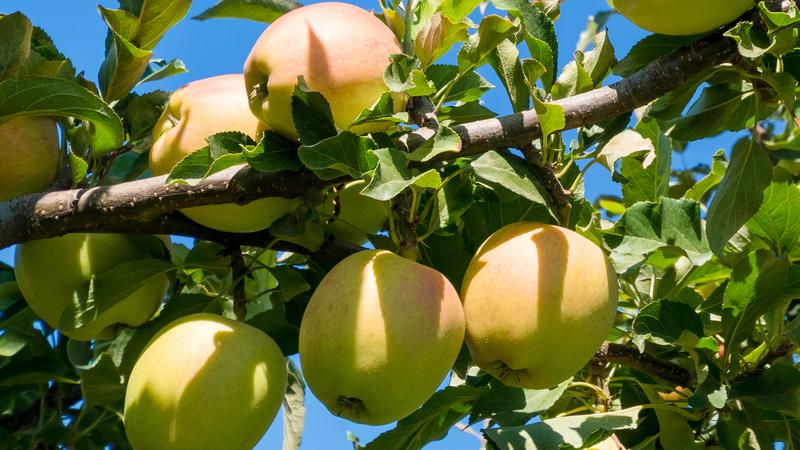
Heat dome effects linger for Okanagan Apple crop (Photo 129791188 © Alexander Naumov | Dreamstime.com)
Quantity down, quality up

Heat dome effects linger for Okanagan apple harvest

Sep 23, 2022 | 5:00 AM

Any farmer will tell you that much of their success is weather dependent and that has been very evident with the 2022 apple crop.

“The apple harvest is very late this year, due to a late, cool spring. The cherry (now complete) and apple crops are light this year. One factor was the impact of the 2021 heat dome on developing fruit buds that would emerge in 2022,” B.C. Fruit Growers Association (BCFGA) general manager Glen Lucas said.

The upside of lower quantities can be better quality which this year is the case across most varieties.

“Quality is excellent as usual. Our valley has the best conditions in North America for tree fruit production. The market is always good for our apples. They’re the best,” BCFGA president Peter Simonsen, remarked.

Simonsen and his family operate 45 acres of certified organic apples, pears and peaches near Naramata. He notes the Sterile Insect Release program to control coddling moth allows orchardists in the valley to use fewer chemical sprays, making apples and pears more appealing to an increasingly health conscious consumer.

The financial return on apple sales continues to be a concern for growers. In recent years, returns to farmers were one-third the cost of production inputs. At the same time, consumers are paying $1.29 to over $3.00 a pound retail, depending on the varietal.

Local consumers can help ease the pain a little by partaking in farm-gate sales where the producer receives full value for the crop. That isn’t feasible for the entire crop though, as it is exported to the rest of Canada, the United States and other markets.

“Pricing is uncertain with our industry in flux. Growers are the last paid in what we call the leftover system. Returns have been below the cost of production for the past few years while the retail margin has grown. Prices need to be strong this season, and stay strong, to keep the industry alive,” Simonsen stated.

The financial challenges have orchardists weighing their options as other crops are proving to be more lucrative.

“Many growers are exiting the apple business, or converting to grapes or cherries,” Simonsen noted.

According to estimates from the province, the Okanagan has one-third of the apple acreage it had 30 years ago. More than 20,000 acres of apples were grown in the region in 1992 compared to less than 7,500 acres now. The North Okanagan is one of the few growing regions where apple acreage has increased slightly.

View Comments