Get the Top, Local stories delivered to your inbox! Click here to join the daily Vernon Matters newsletter.
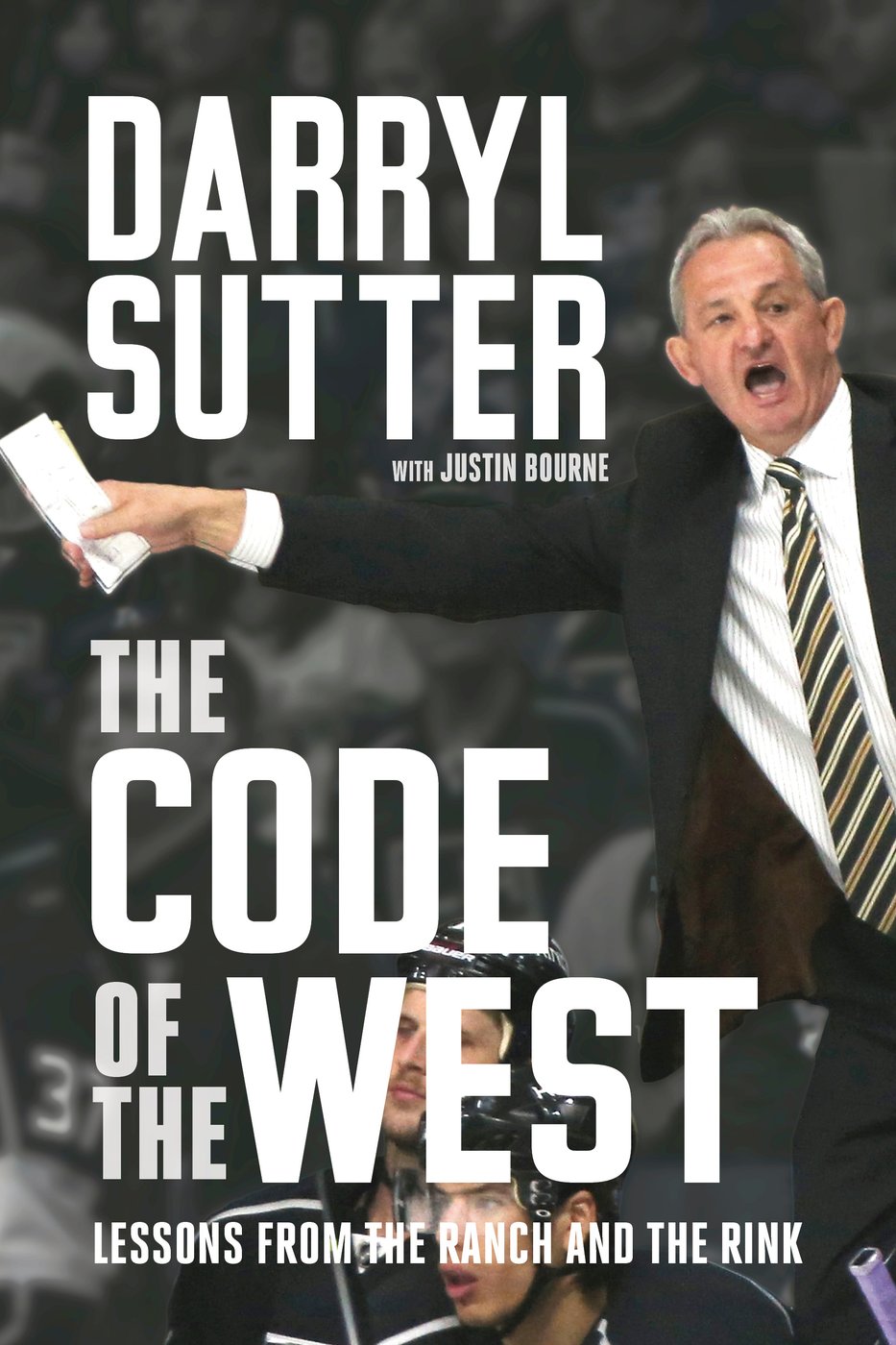
The cover of "The Code of the West: Lessons from the Ranch and the Rink," by Darryl Sutter and Justin Bourne, is shown in this handout image. THE CANADIAN PRESS/Handout — Penguin Random House Canada (Mandatory Credit)

Stanley Cup winner Darryl Sutter shares wisdom in book, doesn’t rule out NHL return

Oct 9, 2026 | 2:00 AM

Only a specific set of circumstances would get Darryl Sutter off the family ranch and behind an NHL bench or into an owner’s box again.

He’s a walking NHL textbook after 45 years in the league as a player, coach, general manager and advisor, with two Stanley Cup titles under his belt buckle as head coach of the Los Angeles Kings.

The 68-year-old from Viking, Alta., has chronicled his life, his work and his beliefs in “The Code of the West: Lessons from the Ranch and the Rink.”

The 260-page book, to be released Tuesday by Penguin Random House Canada, is told in Sutter’s conversational style to writer Justin Bourne. Sutter also narrated the audiobook version.


It covers a lot of hockey and life ground efficiently in keeping with Sutter’s mantra of “Talk less and say more.”

“It’s a good story, and there’s some good lessons in it and good advice, and that’s what’s important,” Sutter said in an interview.

A 32-team league with expansion on the horizon keeps alive the possibility that Sutter’s NHL story isn’t over.

“That’s a question that gets asked a lot,” he said.

A team that’s tracking to win a Stanley Cup and one that Sutter feels an emotional connection to are prerequisites for his return. But family considerations drive his decisions because his 33-year-old son Chris has Down syndrome.

“The only way I’d ever go anywhere again is if it worked for Chris,” Sutter said. “The places I coached, I love those places. I went to Calgary twice, California, I mean Northern California, Southern California, and I basically grew up in Chicago, so those places are more special to me than anywhere else.

“Once you’ve won championships, that’s all that matters. It’s not ‘I need an NHL job, or I want to be in the NHL.’ It’s strictly if that team I believe has a chance at winning a championship, and there was interest, I’d still be interested for sure.”

Meanwhile, there’s combining to do and horses to halter break on the Sutter family’s 3,300-acre spread northeast of Viking. Sutter says he still gets phone calls from coaches and players asking his opinion on last night’s NHL games.

He was an advisor to the Anaheim Ducks’ coaching staff from 2019 to 2021 before returning to the Calgary Flames to coach until 2023.

A mentorship role is still in Sutter’s wheelhouse. He questions why there aren’t more coaching advisors in the NHL.

“I don’t understand how the NHL with 32 teams … how the coaching staffs do not have that type of person with them to bounce stuff off or to help them or watch games and give them different (feedback),” Sutter said.

“There’s probably 20 coaches with very limited playoff experience. That’s where you find out what kind of coach you are.

“Maybe as the league gets bigger, maybe there is more room for that. When you’ve got a $ 102-million-dollar, or whatever it is now, salary cap and you’re dividing that between 23 guys, I would think that the coaching staffs would definitely be better if they had some of that going on with them.”

The story of the six Sutter brothers who all played and went on to work in the NHL is well-told hockey lore and the subject of a 1990 book, “Six Shooters.”

The barn hayloft where they played hockey every spare second they had after chores also gets its due in Sutter’s book.

But he drills more into how ranch work shaped his life and hockey philosophy. Thus the title “Code of the West.”

“That was really important,” Sutter said. “With everything that’s going on in the world now, and you don’t want to make it bigger than it is, but the western way of life has really attracted a lot of publicity, you’d say, in the last few years.

“The rural way of life, the ranch way of life, the connection to the land way of a life, that’s why the name of the book was important. The ‘Code of the West’ wasn’t something that was just pulled out of a hat. It’s something that, quite honestly, if you can live by those standards, then you’re doing all right.”

This report by The Canadian Press was first published Oct. 9, 2026.

Donna Spencer, The Canadian Press