
Get the Top, Local stories delivered to your inbox! Click here to join the daily Vernon Matters newsletter.
(ID 4451321 © Misscanon | Dreamstime.com)
3 hours & 28 minutes

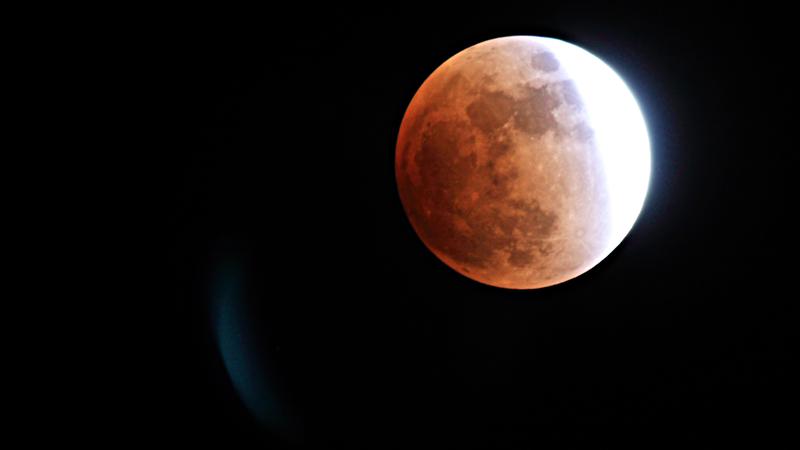
Longest partial lunar eclipse in nearly 600 years set for tonight

Nov 18, 2021 | 11:35 AM

A once-in-half-a-millennia near-total lunar eclipse event will be visible over the Okanagan tonight, Nov. 18, if the weather cooperates.

The partial eclipse will take 3 hours, 28 minutes and 23 seconds to run its course, according to NASA, which is the longest partial eclipse in 581 years.

“There hasn’t been a longer partial lunar eclipse since Feb. 18, 1440 (3 hours, 28 minutes and 46 seconds) and it will remain the longest partial lunar eclipse for 648 years until Feb. 8, 2669 (3 hours, 30 minutes and 2 seconds),” said a NASA blog post.

Speaking with Vernon Matters, Okanagan Science Centre programmer Kevin Aschenmeier said locally, the eclipse will begin at around 10 p.m.

“The moon will start to darken as the moon goes through the partial shadow, the penumbra, of the earth,” said Aschenmeier.

“With the sun shining on the full moon, as eclipses only occur during a full moon, the earth will get in the way of the sun and the moon slowly. At one o’clock in the morning, about nine-tenth of the moon should be covered, and it will end at four.”

EarthSky reports that, though the shadow will first become visible on the moon at around 10 p.m. locally, the partial eclipse won’t actually officially begin until around 11:18 p.m., with the shadow reaching it’s maximum coverage at around 1 a.m.

The partial eclipse will officially end at 2:47 a.m. but the shadow will remain visible on the moon until just after 4 a.m.

Aschenmeier told Vernon Matters that lunar eclipses can provide some valuable scientific information.

“[Eclipses] reaffirm what we know about the orbital dynamics of how the sun, the earth and the moon line up, because technically we should be able to have a lunar eclipse every full moon,” Aschenmeier explained.

“But of course it doesn’t happen every full moon because the moon’s orbit around the earth is tilted a wee bit, so sometimes the moon goes through the shadow, and sometimes it doesn’t. This time we’re just lucky that it’s lining up with the earth’s shadow.”

Aschenmeier noted that, weather permitting, the eclipse will be viewable in the night sky, and advises people to observe it with just the naked eye rather than a telescope in order to fully witness the event.

View Comments