Get the Top, Local stories delivered to your inbox! Click here to join the daily Vernon Matters newsletter.
(Peter McIntyre/Vernon Matters Staff)
Bolstering existing Connections Program

EASE Program expansion will address anxiety and mental health in School District 22

Oct 14, 2021 | 6:00 AM

The province is expanding the EASE (Everyday Anxiety Strategies for Educators) Program to include Grades eight to 12 in British Columbia, which will in turn bolster the ongoing Connections Program being run by School District 22.

EASE is a free training tool for educators in B.C. that provides resources and materials that fit into the B.C. curriculum to help understand and address anxiety, mental health and stress in their students.

The program was first launched in 2019 for kindergarten to Grade seven educators to access. Speaking with Vernon Matters, Natashia Bacchus, a District Elementary Behaviour Specialist with a Mental Health Focus and a District and Provincial Trainer and Liaison for the EASE Program, says EASE was first offered to those lower grade educators as an early intervention option.

“If we can teach kids skills early in life, then at 16 and 17 they won’t be on a mental health waiting list trying to get individual one-on-one therapy,” said Bacchus.


“So the idea was ‘Can we get in early, even at kindergarten, and teach kids how they can recognize a negative thought versus a positive thought and turn that around? How is this helpful and unhelpful?’ And a lot of kids can actually acquire the skills they need to manage their anxiety for a lifetime without having to get individual service.”

Bacchus also told Vernon Matters that a study by Simon Fraser University in 2000 found that 12.7 per cent of young people aged four to 18 have a mental health disorder at any given time, and that includes 5.2 per cent with an anxiety disorder. That figure translates to 95,000 children and youth in B.C. with a mental health disorder, and two students per class across the province experiencing high anxiety.

The EASE Program provides educators with information on how to recognize and address anxiety, not just in their students, but also in themselves.

Bacchus stated the understanding of anxiety in children and youth has changed in recent years, and that previous methods of avoiding situations that cause anxiety isn’t nearly as healthy as teaching kids coping skills so they can get through those moments and overcome their anxiety. She noted that techniques to overcome those moments are included in the EASE resources.

“Let’s say there’s a presentation in the classroom and [the child] was freaked out about presenting in front of their peers. We can take that back and go ‘Okay, let’s start by presenting in front of a mirror and practicing that step, then presenting in front of parents.’ Those kind of things as you work your way up so that you actually are able to do the presentation and don’t just avoid it,” said Bacchus.

Bacchus said there has been demand for this program’s expansion to high school students since it was first launched, and as mental health has become more of an issue in the past year under the COVID-19 pandemic, it’s a good time to roll it out to older students.

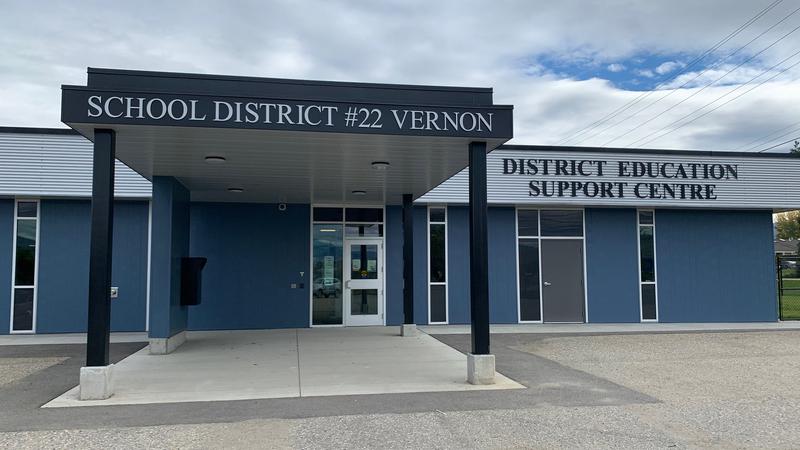
Christine Love, the Director of Student Support Services for School District 22, told Vernon Matters the first round of the EASE Program was well received by local teachers.

“We have got quite a number of our elementary counsellors who have full training on the EASE Program for those elementary years and they coordinate small group work and support in-class around that EASE Program,” said Love.

“And there’s also been a large number of teachers who have taken the training and have signed up individually for that training and have supported students within their class.”

Love also mentioned that Bacchus has created resources to support the teachers as they incorporate the resources into their curriculum. She said teachers and counsellors that have taken the training can sign out those resources from the District Resource Centre. Bacchus said more resources specific to the older grades will be created so they can be accessed in District 22.

In addition to expanding the program to more grades, the EASE Program is expected to compliment the Connections Program currently offered at schools in District 22.

Robyn Lindahl, the District Behaviour Specialist at School District 22, told Vernon Matters that Connections is a flexible program made up of components of other programs in the district that catch kids before they fall out of the school system.

“So [the students] work on paper-based courses, they’re in the main schools, but it’s almost like another classroom within the school where they have a teacher and then it’s [Grades] eight to 12 in there and it’s a flexible program that fits every kid’s personal needs,” said Lindahl.

Love noted personal and mental health issues create a risk of losing a student to a drop out, or turn to alternative, specialized programs. She said the program is staffed by fully qualified school-based resource teacher who can support these students, while also encompassing a mental health component.

“What we’re looking at is we want to use the EASE Program to teach that to the school-based resource teacher, who will then roll it out to those very vulnerable students,” said Love, adding that ongoing work such as community involvement and volunteering, physical activities and outings are also being used currently to support mental health wellness.

“We’re happy that the Connections Program has spread through our main high schools, all our big high schools within Vernon, and we’re looking to incorporate the EASE Program into those programs.”

Love added work is underway to coordinate staff and administration to determine how EASE should be rolled out through the district. The training is available at the Healthy Minds B.C. website, and Bacchus said it takes about three hours to complete.

The EASE Program was developed by B.C.’s Ministry of Children and Family Development and Anxiety Canada, in collaboration with teachers, school counsellors, social and emotional learning educators, Open School B.C., and other subject matter experts.

View Comments