Get the Top, Local stories delivered to your inbox! Click here to join the daily Vernon Matters newsletter.
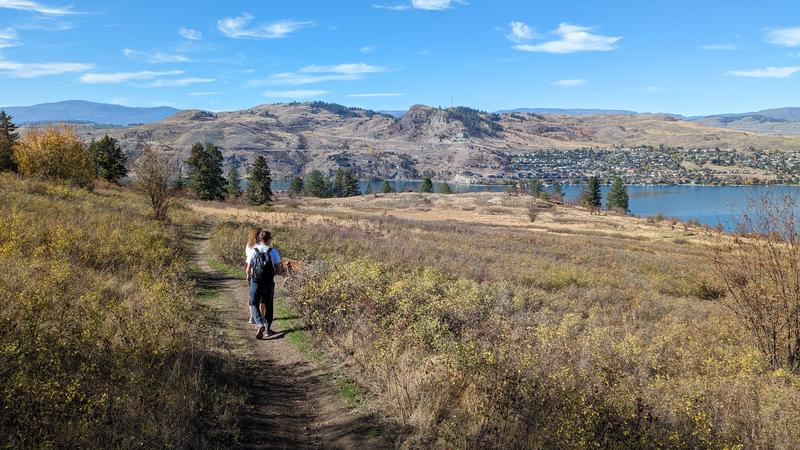
File photo of dry conditions at Kalamalka Lake Provincial Park (Image Credit: Liam Verster / Vernon Matters)
Warm, Dry Winter

Super El Nino forming, could have serious impacts on Vernon and the Okanagan

Nov 10, 2026 | 4:45 PM

A weather system developing over the Pacific Ocean could have serious ramifications locally and for the Okanagan.

A Super El Nino has been developing and intensifying since early September, and Hayley Dosser, a Physical Scientist for the Seasonal-to-Decadal Climate Services branch of Canadian Centre for Climate Services, said the system could raise the ocean’s surface temperature as high as four degrees above the baseline normal this winter, which would be an “unprecedented” El Nino event and potentially the worst on record.

That could have impacts felt both across the province and locally in Vernon and the Okanagan.

“There is a 78 per cent probability of a warmer than normal winter season [for Vernon],” Dosser outlined.

“[Our forecast also] gives a 63 per cent probability that Vernon will be unusually warm this winter. Unusually warm means at least as warm as the warmest 20 per cent of winters between 1991 and 2020.”

Looking even further ahead, Dosser also said the El Nino had a 94 per cent chance of making Vernon warmer than usual over the spring, and an 86 per cent chance that it would unusually warm, with that trend continuing into the summer as well.

While precipitation is harder to forecast than temperature, Dosser said the El Nino was also expected to have impacts on the rain and snowfall.

“Right now, we don’t have a clear signal for precipitation for Vernon for winter or spring, but we can see [in our forecast] conditions to the north and east are leaning drier-than-normal,” Dosser stated.

“We can’t say much about the snowpack for winter right now, we don’t have a skillful forecast for that, but for spring we are seeing that near Vernon we have a 77 per cent probability of below normal snow water equivalent, [or the amount of liquid water you get if you melted the snowpack]. This could be caused by either less snow accumulation or by an earlier-than-normal spring melt and, given the temperature forecast, an early spring melt is quite likely.”  

Dosser noted these conditions could have long term effects on Vernon and the Okanagan in terms of the drought persisting into another year, and higher risks of wildfires and water scarcity in the summer of 2027.

These risks are subject to change depending on the amount of precipitation seen over the coming months, and the timeline for the spring snow melt.

Vernon City Council accepted the report from the Canadian Centre for Climate Services, and requested the presentation also be made to the Greater Vernon Advisory Committee as that group is in charge of overseeing the local water services.

Speaking with Vernon Matters following Tuesday’s meeting, Mayor Kari Gares said the city had been monitoring the development of this system, but ultimately planning and preparing for it was not in their hands.

“I think the challenge the city has at this time is we’re not actually responsible for water but we have somewhat of a responsibility for the infrastructure that is within our boundaries, but from a political standpoint I think this is something that we need to be very much aware of and mindful of as we start to set directions or policy at the RDNO level,” Gares explained.

“I think from the City of Vernon perspective, it’s just being in the know and understanding exactly what the ramifications could look like, so when we’re sitting down in the appropriate setting we’re more knowledgeable .”

The city received a temporary permit from the province to use reclaimed water to support the agricultural sector during the drought this past summer. That permit was set to expire at the end of the year but Gares told Vernon Matters staff had been tasked with applying for an extension to be able to use the water for that purpose again through to 2028.

View Comments