Get the Top, Local stories delivered to your inbox! Click here to join the daily Vernon Matters newsletter.
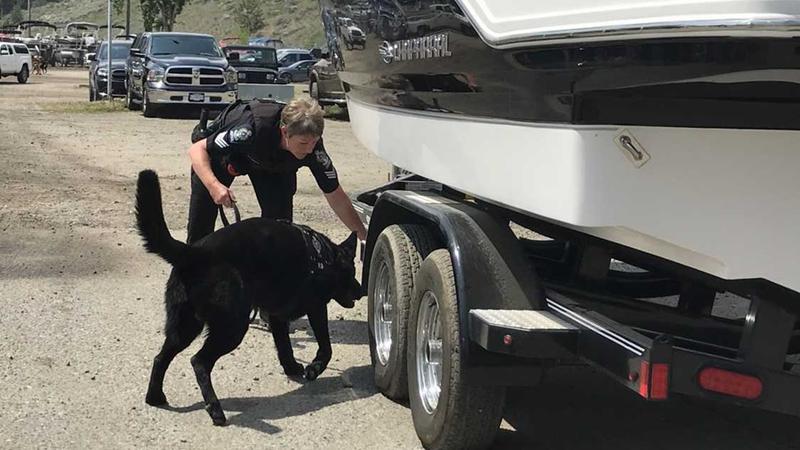
Invasive mussel inspection (file photo/B.C. Conservation Officer Service)
Invasive Mussel Protections

Risk of lost funding sparks renewed calls for invasive mussel protection

Jan 18, 2024 | 4:15 PM

The Okanagan Basin Water Board (OBWB) has renewed its call for protections against invasive mussel species.

The OBWB stated the federal government may be cutting funds for invasive mussel inspection sites in B.C., despite an ongoing outbreak of quagga mussels in Idaho.

The concern stems from the federal budget announcement in May that included $750-million for the Canada Water Agency, with $420-million of that to be used to address water concerns in the Great Lakes but no money allocated to protecting western Canada from invasive species.

“We appreciate there’s a Canada Water Agency, but they’re pouring money into remediation for the Great Lakes without protecting the still pristine waters in the west,” OBWB Executive Director Anna Warwick Sears, said.

“The government has identified the Fraser River as a priority watershed. Regardless of what they do in the Okanagan, they should be true to their word and prioritize funds for the Fraser River. By protecting the Fraser, they will help protect the rest of the province.”

In response to the potential loss of funding, the OBWB sent letters to the Ministry of Fisheries, Oceans and the Canadian Coast Guard, the Ministry of Environment and Climate Change, the Ministry of Public Safety, Democratic Institutions and Intergovernmental Affairs, and the Prime Minister’s office.

“This is critical, we are going right to the top,” Water Board Chair Sue McKortoff stated.

“After all the decades of work done by the Okanagan Nation Alliance and partners to bring the salmon back, it would be a crime to see the salmon population collapse because we failed to protect our freshwater ecosystem from invasive zebra and quagga mussels when we still had a chance. This would ruin an important food source to local First Nations, as well as everything else that depends on the salmon, including birds, bears, orca.”

The letters were also forwarded to B.C. MPs, MLAs, the Assembly of First Nations, and chambers of commerce.

“The Government of Canada should provide funds to at least match provincial government efforts across the west, or plan for significant higher management costs in the near future,” the letter stated.

The OBWB has been calling for enhanced protections since the quagga mussels were first found in the Snake River, a tributary to the Columbia River, in September of 2023.

The enhanced measures recommended included a temporary moratorium of watercraft coming from outside of B.C., and enhancements to the Invasive Mussel Defence Program and inspection sites.

Between May and December of last year, 155 watercraft on their way into B.C. that were identified as high-risk for the mussels were intercepted. Of those, 79 were decontaminated and 36 were quarantined. In 14 of those cases, invasive mussels were confirmed on-board.

The OBWB added a recent B.C. government economic impact report said an invasive mussel infestation could cost the province between $64- to $129-million annually, but adds the report leaves out the impacts to fisheries and qualities of life so it’s estimated the economic impact would actually be higher.

The OBWB’s Okanagan WaterWise outreach campaign Don’t Move A Mussel remains ongoing to raise awareness and educate people on invasive mussels and how to keep them out of B.C. waters.

View Comments