Get the Top, Local stories delivered to your inbox! Click here to join the daily Vernon Matters newsletter.
File photo of Lake Okanagan seen from Kin Beach in Vernon (Image Credit: Liam Verster / Vernon Matters)
Severe Drought Conditions

Lake Okanagan level dips to record low as drought conditions continue

Jul 23, 2026 | 11:33 AM

The water level at Lake Okanagan has dipped to a new low.

The B.C. River Forecast Centre said the daily water level has dropped to its lowest point on record dating back 80 years.
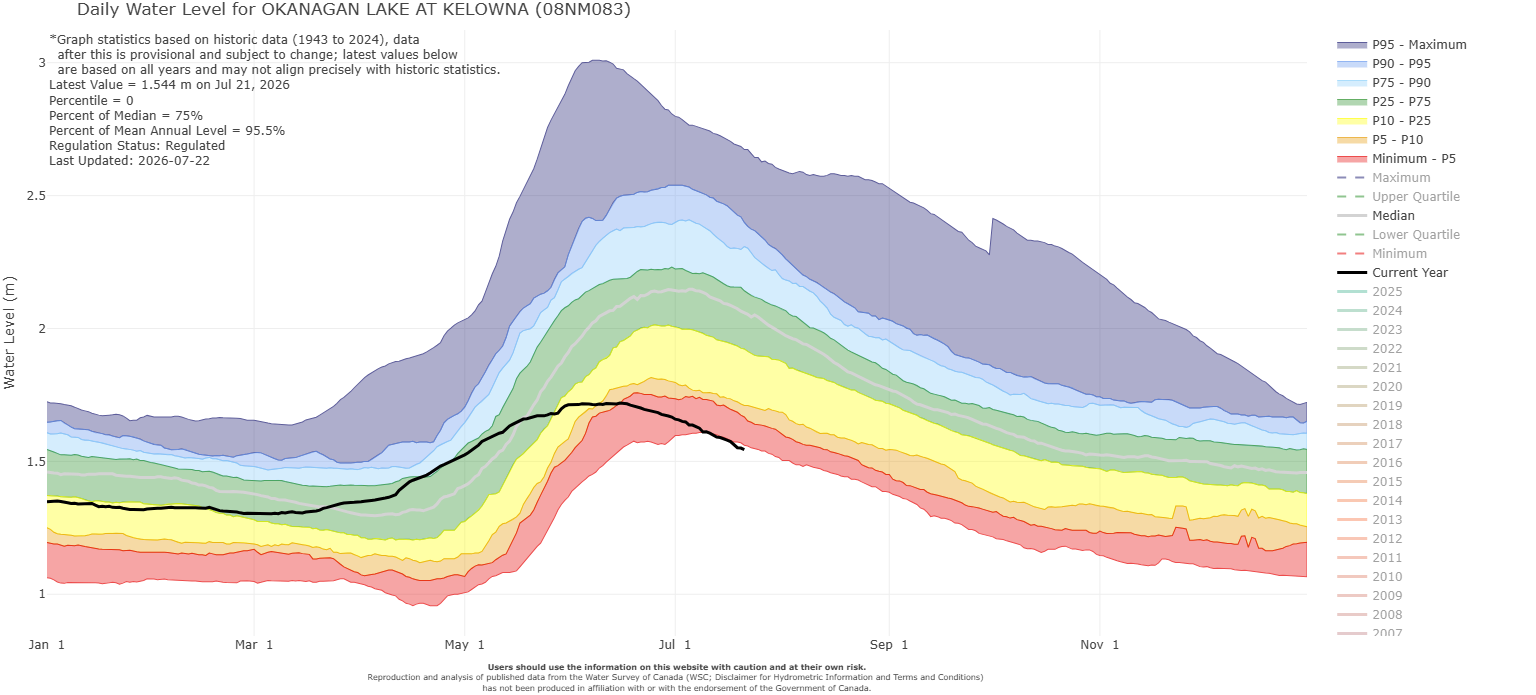
The black line indicates the current daily water level for Lake Okanagan, which was at a historic low
The black line indicates the current daily water level for Lake Okanagan, which was at a historic low (Image Credit: B.C. River Forecast Centre)

“Prolonged low water levels in Okanagan Lake can reduce the availability of nearshore habitat, affecting fish spawning and rearing areas, as well as other aquatic ecosystem functions,” the agency stated in its drought report.

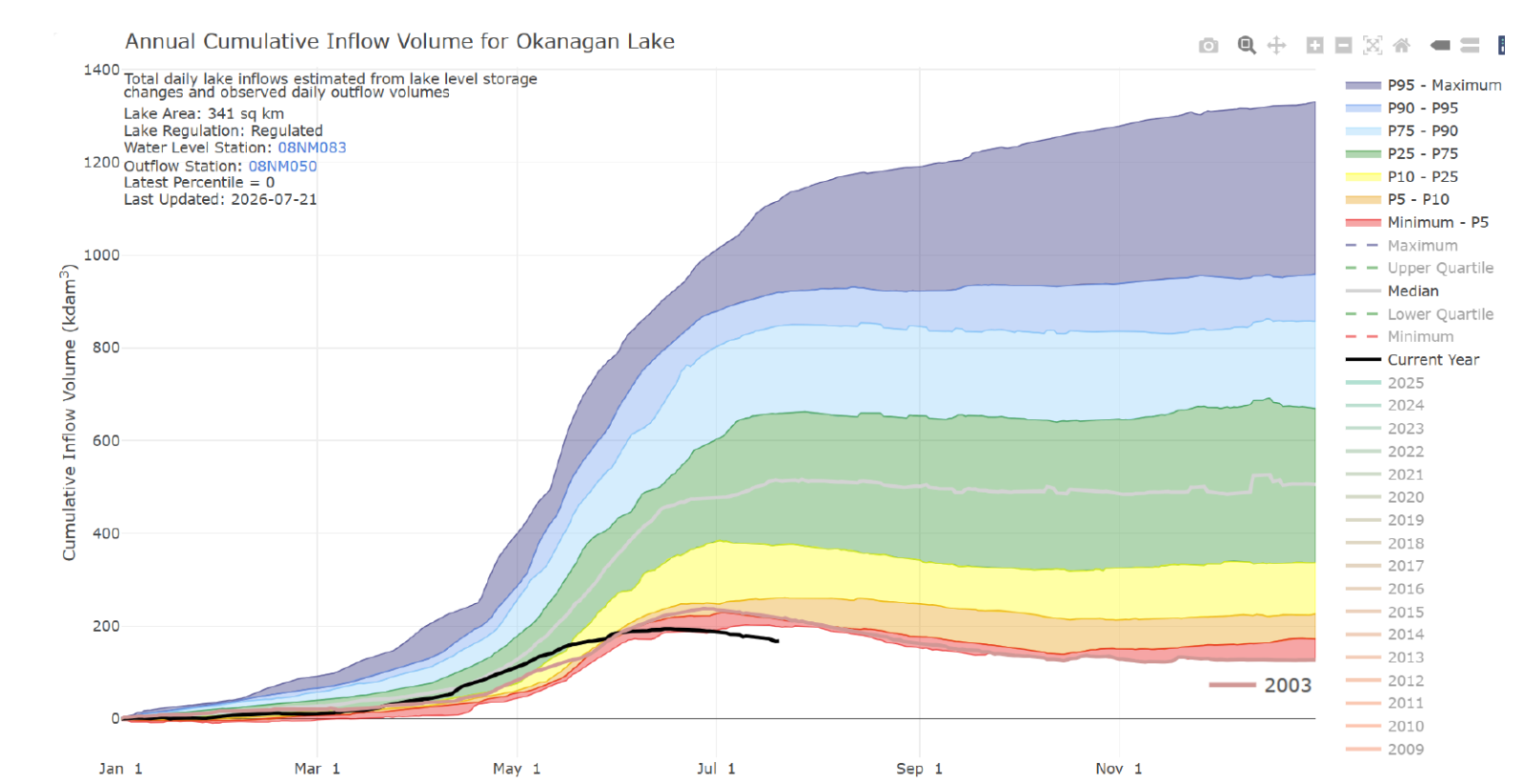
The River Forecast Centre said the annual cumulative inflow volume for Lake Okanagan also was at a record low.

The black line indicates the 2026 cumulative inflow volume for Lake Okanagan, which was at a historic low
The black line indicates the 2026 cumulative inflow volume for Lake Okanagan, which was at a historic low (Image Credit: B.C. River Forecast Centre)

The agency warned the lake level “may not be replenished by precipitation this winter and lake levels may take time to recover, with low levels potentially persisting into next year and continuing to increase pressures on water supply and ecosystems.”

Salmon River, which runs through the Shuswap also was seeing record low stream flows according to the River Forecast Centre.

The water level details were provided in a report that also said the Okanagan was at Drought Level 4 as of July 23.

That was the sixth straight week the region received the second highest possible rating, indicating severe dryness in the Okanagan.

The agency urged people follow their water restrictions to help reduce demand and preserve supply, and protect lake levels and stream flows.

View Comments