Get the Top, Local stories delivered to your inbox! Click here to join the daily Vernon Matters newsletter.
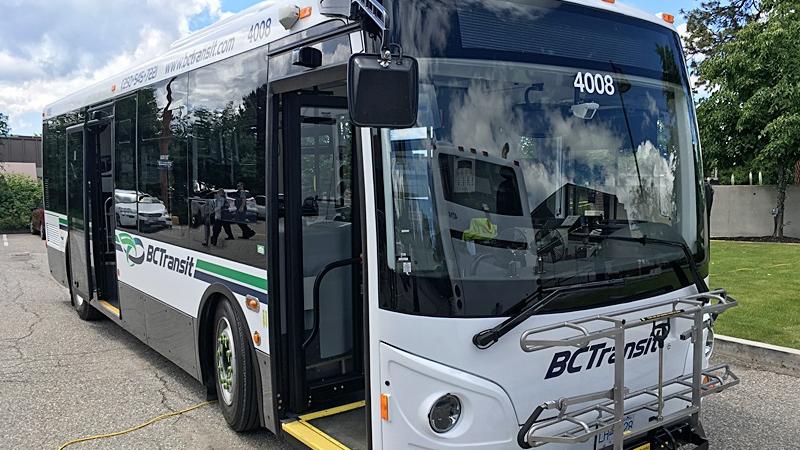
(file photo/Vernon Matters Staff)
Transit Week Challenge

Vernon council partly on board with ‘transit challenge’, cost of service discussed

Jan 23, 2024 | 1:00 PM

Vernon city councillors will be riding the bus next week, but not for all their trips.

At the regular meeting Monday, Jan. 22, the Okanagan Transit Alliance asked city council to take part in the Interior-wide Transit Challenge Week.

“We have challenged every mayor and council in every [Okanagan] jurisdiction to take public transportation for the majority of their transportation needs, whenever reasonable,” Stephanie Hendy, a representative for the Alliance, told council, noting this is a challenge to ride the bus or community shuttles, and is not an alternative transportation challenge.

“We want mayor and council across all jurisdictions in the Okanagan to know what’s working and what’s not working. So that can be: is it reliable, where are the stops in proximity to where you need to be, are there sidewalks, is it safe, was it clean and snow removed? Things of that nature. It’s really just to dig in and experience what people who ride public transit are experiencing in the city.”

After hearing the presentation, council agreed to partially support the request and ride the bus when possible, though none committed to using it as their main mode of transportation during the challenge week of Jan. 29 to Feb. 4.

Hendy said Councillor Teresa Durning, who was not in attendance for the meeting Monday, informed her that she would take the bus for three or four days.

Councillor Brian Guy said he would be away in the Lower Mainland for much of the week, but would ride the bus for the days when he was in Vernon. He also said he planned to use public transit for his main mode of transportation during his trip.

Councillor Kelly Fehr said “the nature of his work” required him to use a vehicle, and Councillor Kari Gares said she had a relative in hospital so she could not participate as she needs to make frequent trips to the hospital.

Gares and Mayor Victor Cumming also noted that they live in neighbourhoods not served by public transit, making daily commutes on the bus not possible.

Council noted they do receive information on the transit services from the public.

“In my day job, as you know, I do work with people who often can’t afford cars or have the luxury of having a vehicle, so I do receive input on transit quite often. Granted, I haven’t actually sought that out in a while, so what I will commit to you is that I will seek input from a number of people that do rely on [public] transportation for the next little while and provide that information back to council,” Fehr said.

“We do receive emails quite often and information from the public around those concerns so I feel we’re quite aware of that. But as far as personal experience regarding transit, I do lack that so I will try to seek that out.”

Gares said the city is always accepting input on transit services.

“We have received emails from individuals within the public. Big concerns over the transit stops and making sure they’re plowed out so people have access from the bus to the bus stop and so forth,” Gares commented.

“We are very mindful of those things and we do monitor them carefully.”

Hendy noted participation in the Transit Week Challenge was not an endorsement for the Alliance’s other campaign to have the Regional District of North Okanagan take over the regional public transit service after the contract between B.C. Transit and TransDev expires in the upcoming spring.

Though not officially brought forward for discussion, council did have some inquiries about that initiative.

The Alliance wanted a regional approach to public transit operations, rather than having it provided by an international corporation as it currently is with the partnership between TransDev and B.C. Transit. Hendy noted there was no local company currently available to provide that service.

City staff also informed council that transit requires a lot of funding, most of which comes from the province.

“The cost, in total, that we had in 2022 was just under $4.5-million for operating the system,” Danielle DeVries, transportation planner for the city, told council.

“The portion of that that was paid by the City of Vernon was only about $1.6-million. The rest is covered by the province’s grants and the revenues and the District of Coldstream.”

DeVries noted Coldstream’s contributions to the public transit operations in 2022 was roughly $87,000, and revenue generated from riders during that year was just below $800,000.

“So what we’re looking at then is, round figures, under 20 per cent of the [total] costs are covered by fares, 17, 18 per cent or whatever it is, is covered by fares,” Mayor Victor Cumming said.

“So if we’re going to increase the transit in Vernon we’ve got to come up with an 82 or 83 per cent subsidy for each fare.”

Gares said a resident had recently reached out inquiring about a transit line extension in the RDNO and learned of the challenges in doing that work.

“According to B.C. Transit, to even add a service, it’s seven-plus months to be able to do that,” Gares stated.

“It’s quite a long, drawn out process and I think that would be on the low end of the scale from a timing perspective.”

Gares agreed that providing affordable transportation options is important, but it’s also a matter of balancing the funds available with the partners they work with to provide the service.

Cumming added that, as the population and density in Vernon rises, the subsidies required to operate the transit service will go down because more people will be riding and contributing through fares.

“It also sets up, over time, an ability to increase frequency, and we know if you increase frequency, you increase propensity to take public transit,” Cumming stated.

“We’ve been on a fairly focused effort from our Official Community Plan since ’08 to densify the inner bowl of the City of Vernon, and I think we’ve made substantial steps in terms of increasing that, and this council has approved many projects that would enhance the ability for people to live within that bowl and commute easily.”

The mayor added Vernon “was designed to have a car,” but said the “long, slow process” of providing the bulk of the population with public transportation options was ongoing. He also noted the number of people riding the kick scooters over the past few years indicates a need for more transportation options.

The Okanagan Transit Alliance’s presentation was received for information.

In addition to Councillor Durning, Councillor Brian Quiring also did not attend Monday’s meeting.

View Comments