Get the Top, Local stories delivered to your inbox! Click here to join the daily Vernon Matters newsletter.
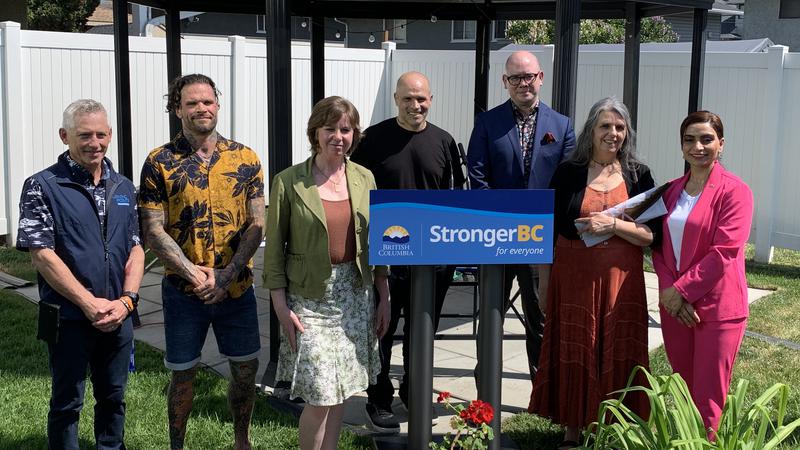
L to R: Brad Houghton, executive director of Addictions Services for Turning Points; David Price, a resident of Bill's Place; Sheila Malcolmson, Minister of Social Development and Poverty Reduction; Guy Felicella, a former addict and motivational speaker; Jonny Morris, CEO of CMHA BC; Margaret Clark of the Okanagan Indian Band; and Vernon-Monashee MLA Harwinder Sandhu at the announcement of the addiction treatment employment services pilot in Vernon (photo by Liam Verster / Vernon Matters)
'life-changing'

Turning Points in Vernon among agencies to run employment services pilot

May 19, 2023 | 2:35 PM

People seeking to break the cycles of poverty, addiction and/or homelessness will soon have more local supports to lock down a job in Vernon.

The B.C. government has announced a new pilot program to integrate employment services within treatment and recovery centres, and the Turning Points Collaborative Society will be one of a select few of agencies running the program.

“People in recovery are doing the really hard work of rebuilding their lives, and we want all people going through addiction treatment to have the care and support they need to recover at every stage of their journey, and that is what brings us here today,” Minister of Social Development and Poverty Reduction, Sheila Malcolmson, announced at Bill’s Place in Vernon Friday, May 19.

“On behalf of Premier David Eby and the province of British Columbia, I am so happy to fund $4.9-million to include employment services into the treatment plans for people in five recovery centres.”

The five centres include Turning Points Collaborative Society in Vernon, ASK Wellness Society in Kamloops, Penticton Recovery Resource Society, Connective (formerly John Howard Society) in Nanaimo, and 333 Recovery Homes in Prince Rupert.

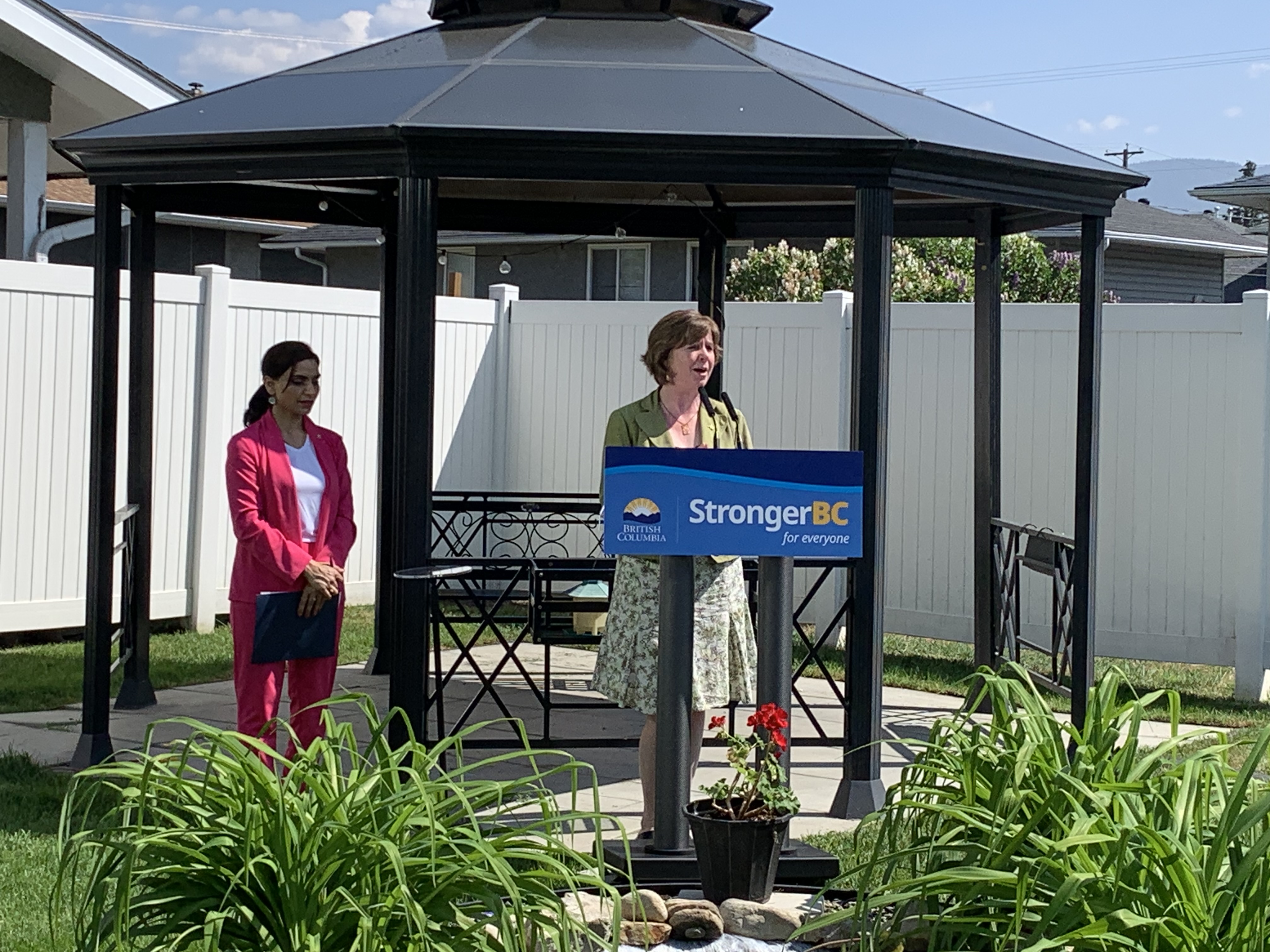
Shelia Malcolmson, Minister of Social Development and Poverty Reduction, announcing the pilot program to include employment services in addiction recovery treatment in Vernon and four other communities (photo by Liam Verster / Vernon Matters)

“This pilot program at five publicly funded treatment centres will develop best practices in supporting people with multiple barriers entering or returning to the workforce,” Malcolmson stated.

“This programing is aligned with our government’s work to provide wrap-around services to people who need them most. People’s lived experiences will continue to inform our programs to support people trying to overcome addictions .”

The funds will be distributed through the Canadian Mental Health Association – B.C. Division (CMHA BC) to the five agencies.

“Here in Vernon, this money is going to provide an occupational therapist, an on-site occupational therapist, vocational counsellors, and job supports, in a really powerful way to walk alongside folks and help them connect to supports, job searches and other things to support readiness and skill-building,” Jonny Morris, CEO of CMHA BC explained.

“This initiative will help bring a chosen job or a career path more in reach for people living with a mental health or substance-use related illness, which is life changing and arguably life saving.”

Through the new pilot, the therapists and counsellors are expected to work with clients in a hands-on manner.

“They’ll have supported employment existing within the bed-based treatment recovery centre while they’re residents. So that could be things like construction, landscaping, farming,” Malcolmson said.

“Vocational counseling and supports will be included; skills-training like computer skills and financial literacy; also psycho-education and psycho-therapy in areas like anger and stress management, distress tolerance, interpersonal communications.”

The program will be “self-directed” to connect the individual receiving treatment with the job or career path best suited or most appealing to them.

“In this kind of work we know people are more likely to stay in employment if they’ve had supports to get there if it’s part of a chosen career path or a path they want to go on vocationally,” Morris explained.

“So a lot of the work is really about choice and making sure the skills, the training, the education will be available. This really is an enhanced program recognizing that a journey through recovery from substance-use can look different and very individual for people, so choice is really at the heart of this investment and programming.”

Malcolmson added employment can be “therapeutic” and “a really powerful tool of recovery that creates hope and resilience and independence and stability for people,” while Morris stated employment can “help people find dignity, purpose, and meaning.”

Those sentiments were shared by people with lived experience at the announcement Friday.

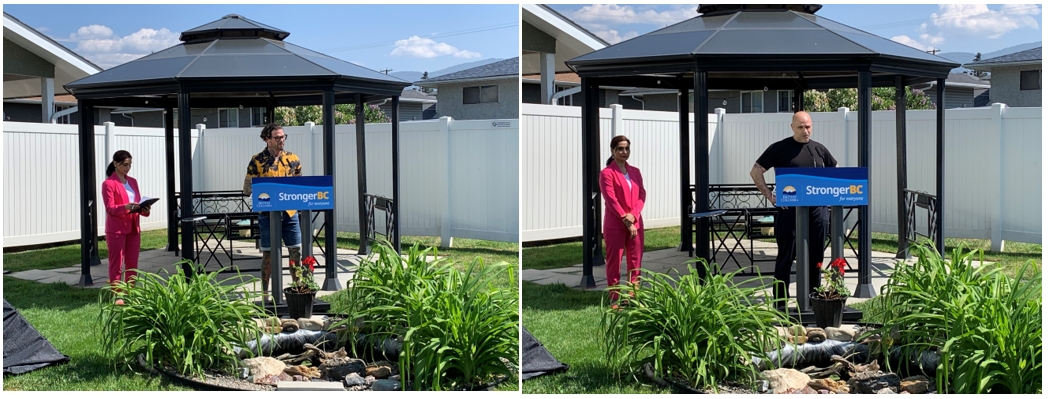
David Price and Guy Felicella told their stories and expressed their support for the employment services pilot at the event in Vernon Friday (photos by Liam Verster / Vernon Matters)

David Price, a resident of Bill’s Place who had struggled with substance use and homelessness, said treatment helped him recognize self-destructive patterns and created a structure and foundation he could build on.

“With this support from CMHA and the employment and volunteer opportunities that will be available with these funds, myself and other clients like me will continue to be supported in our long term recovery and contribute to our families and communities,” Price said.

“Today I’m now 19 months sober. I’m employable and I volunteer in my community. I have a sense of purpose and self worth, but most of all, I have peace in my life.”

Guy Felicella, who battled the cycles of addiction, crime and homelessness for nearly two decades, said being provided supports to get people clean and on track to getting a career can have a “life changing” and “powerful” impact on individuals, reflecting on what made recovery possible for him being the first time he received a paycheque and it representing him having accomplished something.

“It may not seem like a big deal to all of us, and there’s a lot of things in life we take for granted, and for me [the paycheque] was everything,” Felicella said.

“I still remember that feeling of pride, that filled sense of purpose and self-belonging and it was not something I had felt in a long time.”

Felicella added it is important to set people up for success after treatment as failure can lead to falling back into old patterns and relapsing, and stated this new initiative will put people on a path to better themselves and escape those cycles.

The exact amount of funding to be provided to Turning Points and the other four agencies will be determined based on the resources needed at each facility.

View Comments