
Get the Top, Local stories delivered to your inbox! Click here to join the daily Vernon Matters newsletter.
(Dreamstime ID 180238622)

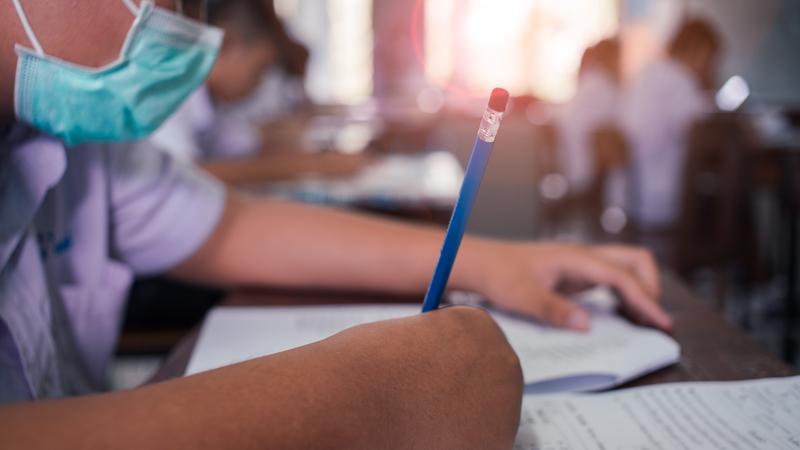
New mask policy covers B.C. schools

Feb 4, 2021 | 10:24 AM

The B.C. government has announced a new mask-wearing policy for the province’s schools.

All middle and secondary students and K-12 staff will now be required to wear non-medical masks in all indoor areas, including when they are with their learning groups. The only exceptions are when:

  • sitting or standing at their seat or workstation in a classroom;
  • there is a barrier in place; or
  • they are eating or drinking.

Prior to these changes, masks were required for middle and secondary students and all K-12 staff in high-traffic areas, like hallways and outside of classrooms or learning groups when they could not safely distance from others.

For elementary students, wearing masks indoors remain a personal choice. These updates are part of ongoing work of the provincial education steering committee and are in alignment with provincial health updates. Updated guidelines for the child care sector will be made available in the coming week.

“To make sure schools continue to be as safe as possible for students and staff as the pandemic evolves, we have worked with provincial health and our partners on a continuous review of the guidelines, adapting and responding when needed,” Jennifer Whiteside, Minister of Education, said. “We want students, their families and staff to feel confident with the safety measures in place. That’s why we’re making these updates.”

Guidelines have also been strengthened for physical education and music classes. High-intensity physical activities are to be held outside as much as possible. Shared equipment or items, such as weight machines, treadmills or musical instruments, can be used only if they are cleaned between use, according to strict school sanitization guidelines. Students using equipment or playing instruments should also be spaced at least two metres apart and masks are to be used when singing.

B.C. Teachers Federation president Teri Mooring had praise for some of the changes and concern that some steps were not taken.

“Overall, B.C. teachers will be relieved to see the government and health officials finally move on key safety measures like a stronger mask mandate and the potential to improve access to much-needed layers of protection like barriers,” said Mooring. “B.C. teachers have been pushing for critical improvements to the health and safety guidelines in our schools since they were first implemented in September. These changes are long overdue and took a tremendous amount of advocacy from our members and representatives on the government’s steering committee and working group.”

“Today’s changes will make schools safer and that is welcome news. However, the changes do not include improvements to school density, ventilation, or the ongoing inadequacy of contact tracing. We need the government, school districts, and health authorities to step up and make improvements in those areas as well. More can be done to protect teachers, other education workers, students, and the families we all go home to. The employer and health officials have the power to take those steps,” Mooring added.

To support B.C.’s COVID-19 response for K-12 education, the federal government announced $242.4 million in one-time funding for the 2020-21 school year, with the first half of the investment allocated in September. The second instalment of this funding arrived on Jan. 29, 2021. The Ministry of Education is allocating $101.1 million to school districts and $7.5 million to independent schools, and is providing school districts an additional $3.5 million to manage COVID-19 exposures in schools.

To support Indigenous learners, $8.2 million will go towards addressing learning loss and student health, technology for remote learning, education and mental health support, adapting classroom spaces and enhanced cleaning.

There will also be $900,000 allocated for six regional rapid response teams, one for each health authority and one dedicated to support independent schools, with representatives from both school and provincial health staff. These teams, announced by the provincial health officer, will continue to improve the speed of school exposure investigations, so health authorities can inform school districts and families more quickly.

View Comments